Word Explanation
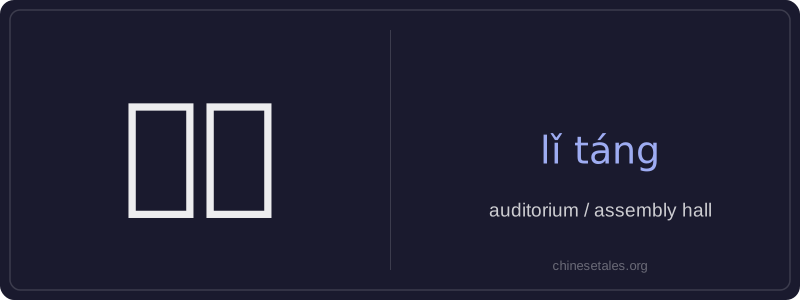
‘礼堂’ (lǐ táng) literally combines ‘礼’ (lǐ), meaning ‘ceremony,’ ‘ritual,’ or ‘courtesy,’ and ‘堂’ (táng), meaning ‘hall,’ ‘room,’ or ‘main building.’ Together, it refers to a formal indoor space designed for gatherings, speeches, performances, or ceremonies — such as school assemblies, graduation ceremonies, or company meetings. It emphasizes function and formality rather than size alone.
This word is commonly used in institutional contexts: schools, universities, government buildings, and large organizations often have a designated 礼堂. Unlike more generic terms like ‘hall’ (大厅, dà tīng) or ‘room’ (房间, fáng jiān), 礼堂 carries connotations of purposeful assembly and official or ceremonial use. It is rarely used for informal or private spaces — you wouldn’t call your living room a 礼堂. The term appears frequently in educational and administrative settings across China and other Chinese-speaking communities.
Example Sentences
Related Words
面条
‘面条’ (miàn tiáo) literally means ‘flour str
背后
背后 literally means 'back + behind' and functions
认同
‘认同’ (tóng rèn) is a verb meaning ‘to ident
无论谁
‘无论谁’ (wú lùn shéi) is a pronoun meaning
中学
'Zhōngxué' literally combines 'zhōng' (middle)
外语
‘外语’ literally means ‘outside language’ —
认为
‘认为’ (rèn wéi) is a transitive verb meaning
认可
认可 (rèn kě) is a formal, transitive verb meani