Word Explanation
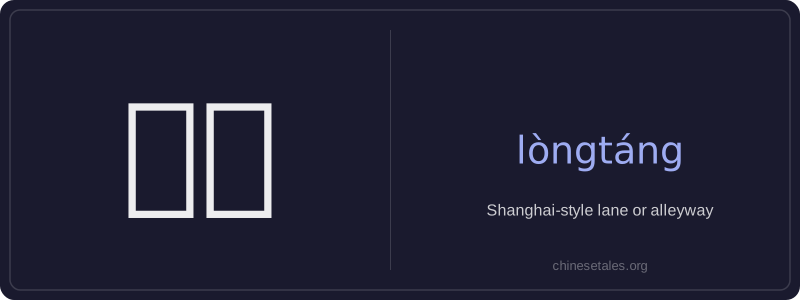
‘弄堂’ (lòngtáng) refers specifically to the narrow, often residential alleyways characteristic of historic Shanghai architecture—typically formed by rows of shikumen (stone-gate) houses. Though ‘弄’ (lòng) on its own can mean 'lane' or 'alley' in some regional contexts, and ‘堂’ (táng) commonly means 'hall' or 'main room', together they form a compound noun with strong local identity: it’s not just any alley, but one evoking Shanghai’s urban texture, community life, and architectural heritage.
These lanes are usually pedestrian-only, lined with low-rise buildings, and serve as semi-private communal spaces where neighbors interact, children play, and street vendors pass through. While similar alleyways exist elsewhere in China (e.g., Beijing hutongs), ‘弄堂’ is culturally and linguistically tied to Shanghai—and using it outside that context may sound overly literary or regionally marked. It carries nostalgic, everyday connotations rather than formal or administrative meaning.
Example Sentences
Related Words
面条
‘面条’ (miàn tiáo) literally means ‘flour str
背后
背后 literally means 'back + behind' and functions
认同
‘认同’ (tóng rèn) is a verb meaning ‘to ident
无论谁
‘无论谁’ (wú lùn shéi) is a pronoun meaning
中学
'Zhōngxué' literally combines 'zhōng' (middle)
外语
‘外语’ literally means ‘outside language’ —
认为
‘认为’ (rèn wéi) is a transitive verb meaning
认可
认可 (rèn kě) is a formal, transitive verb meani