Word Explanation
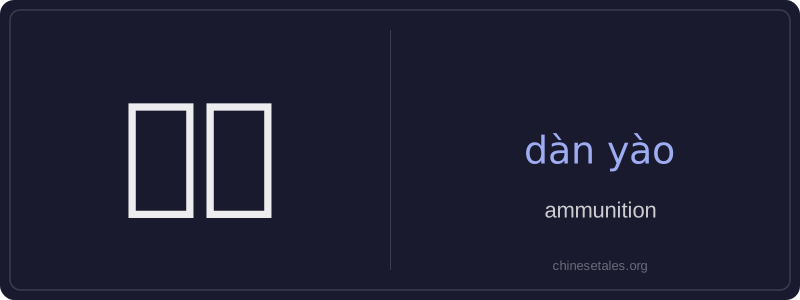
弹药 (dàn yào) literally combines 弹 (dàn), meaning 'bullet' or 'projectile', and 药 (yào), meaning 'medicine' or 'explosive compound'. Historically, 'medicine' referred to gunpowder—the explosive substance that propels projectiles—so the term evolved to mean 'ammunition': all consumable materials used in firearms and artillery, including bullets, shells, grenades, and rockets. It is a formal, collective noun and never used for individual rounds in everyday speech.
This word appears primarily in military, security, historical, or news contexts—not in casual conversation. It carries strong connotations of armed conflict, defense logistics, or law enforcement operations. Unlike English 'ammo', which can be informal, 弹药 is consistently formal and technical; it’s rarely pluralized or modified with measure words like 颗 or 发 in standard usage—it’s treated as an uncountable mass noun.
Example Sentences
Related Words
面条
‘面条’ (miàn tiáo) literally means ‘flour str
背后
背后 literally means 'back + behind' and functions
认同
‘认同’ (tóng rèn) is a verb meaning ‘to ident
无论谁
‘无论谁’ (wú lùn shéi) is a pronoun meaning
中学
'Zhōngxué' literally combines 'zhōng' (middle)
外语
‘外语’ literally means ‘outside language’ —
认为
‘认为’ (rèn wéi) is a transitive verb meaning
认可
认可 (rèn kě) is a formal, transitive verb meani