Word Explanation
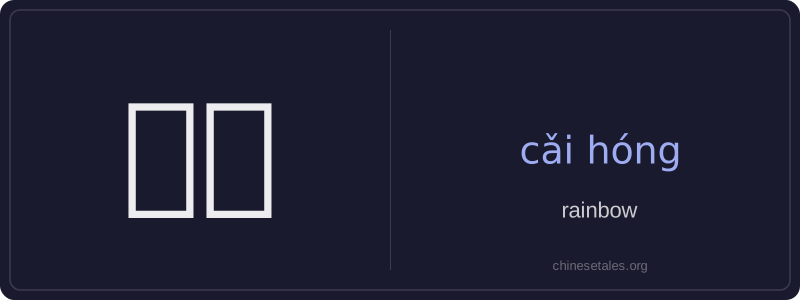
彩虹 (cǎi hóng) literally means 'colored arc' — 彩 (cǎi) means 'color' or 'brilliance', and 虹 (hóng) means 'arc' or 'bow', historically referring to the atmospheric optical phenomenon. Together, they form the standard, poetic, and universally understood term for 'rainbow' in modern Mandarin.
This word is used primarily in descriptive, literary, or educational contexts — for example, when observing weather, teaching science, or describing scenery. It carries a gentle, positive connotation, often evoking beauty, hope, or natural wonder. Unlike some compound nouns with flexible word order, 彩虹 is fixed: you cannot say *虹彩* in everyday speech (though 虹彩 exists as a technical term for 'iris' in anatomy). It appears frequently in children’s books, weather reports, and idioms like 彩虹总在风雨后 ('the rainbow always appears after the storm').
Example Sentences
Related Words
面条
‘面条’ (miàn tiáo) literally means ‘flour str
背后
背后 literally means 'back + behind' and functions
认同
‘认同’ (tóng rèn) is a verb meaning ‘to ident
无论谁
‘无论谁’ (wú lùn shéi) is a pronoun meaning
中学
'Zhōngxué' literally combines 'zhōng' (middle)
外语
‘外语’ literally means ‘outside language’ —
认为
‘认为’ (rèn wéi) is a transitive verb meaning
认可
认可 (rèn kě) is a formal, transitive verb meani