Word Explanation
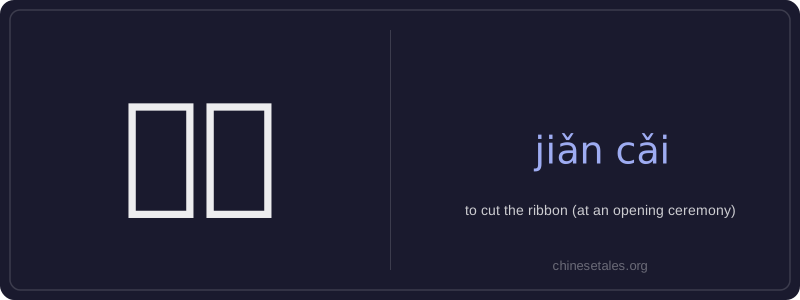
'Jiǎn cǎi' literally means 'to cut ribbon' — 'jiǎn' means 'to cut' and 'cǎi' (here meaning 'colored ribbon') refers to the ceremonial red or multicolored ribbon traditionally used in Chinese opening ceremonies. Though 'cǎi' usually means 'color' or 'brilliance', in this fixed expression it specifically denotes the decorative ribbon symbolizing auspiciousness and new beginnings.
This verb describes the formal, symbolic act of cutting a ribbon to officially open a new business, building, exhibition, or public facility. It’s typically performed by dignitaries, executives, or honored guests, often accompanied by photos, speeches, and festive music. The ritual reflects Chinese cultural emphasis on auspicious beginnings and collective celebration. While rooted in physical action, 'jiǎn cǎi' is now used more broadly — even metaphorically — to refer to the official launch or inauguration of any significant venture.
Example Sentences
Related Words
面条
‘面条’ (miàn tiáo) literally means ‘flour str
背后
背后 literally means 'back + behind' and functions
认同
‘认同’ (tóng rèn) is a verb meaning ‘to ident
无论谁
‘无论谁’ (wú lùn shéi) is a pronoun meaning
中学
'Zhōngxué' literally combines 'zhōng' (middle)
外语
‘外语’ literally means ‘outside language’ —
认为
‘认为’ (rèn wéi) is a transitive verb meaning
认可
认可 (rèn kě) is a formal, transitive verb meani