Word Explanation
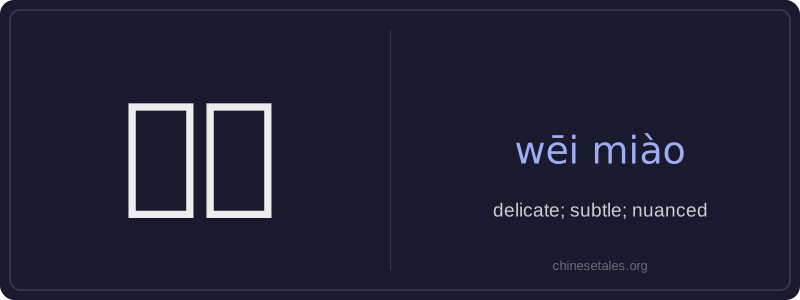
微妙 (wēi miào) is an adjective meaning 'delicate,' 'subtle,' or 'nuanced'—describing something that is finely balanced, not easily perceived, and often requires sensitivity to grasp. The first character 微 (wēi) means 'tiny' or 'slight,' while 妙 (miào) means 'wonderful,' 'clever,' or 'profound.' Together, they convey the idea of a small yet meaningful quality—like a barely noticeable shift in tone, mood, or relationship that carries significant implication.
This word is frequently used in contexts involving human emotions, social dynamics, artistic expression, or technical details—where precision and perception matter. It often implies complexity beneath simplicity: a subtle smile, a delicate diplomatic situation, or a nuanced distinction in meaning. Unlike more neutral words like 细微 (xì wēi), 微妙 carries a connotation of intrigue, ambiguity, or quiet significance, sometimes even tension or irony.
Example Sentences
Related Words
面条
‘面条’ (miàn tiáo) literally means ‘flour str
背后
背后 literally means 'back + behind' and functions
认同
‘认同’ (tóng rèn) is a verb meaning ‘to ident
无论谁
‘无论谁’ (wú lùn shéi) is a pronoun meaning
中学
'Zhōngxué' literally combines 'zhōng' (middle)
见面
见面 literally means 'see face' — combining 见 (t
外语
‘外语’ literally means ‘outside language’ —
认为
‘认为’ (rèn wéi) is a transitive verb meaning