Word Explanation
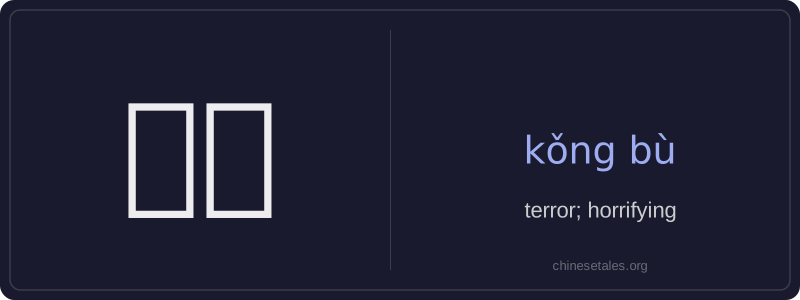
恐怖 (kǒng bù) is a compound word formed from two characters that both relate to fear: 恐 means 'to fear' or 'dread', and 布 (bù) here functions as a morpheme reinforcing intensity—though historically linked to 'to spread', in this context it contributes to the sense of overwhelming, pervasive fear. Together, they express deep, often visceral terror—not just mild anxiety but a chilling, paralyzing dread.
The word functions as both a noun ('terror') and an adjective ('horrifying', 'terrifying'). It’s commonly used to describe extreme threats (e.g., terrorist attacks), supernatural horror (ghost stories, horror films), or deeply disturbing situations. While it can appear in formal news reports (e.g., 恐怖袭击 'terrorist attack'), it also appears in everyday speech when emphasizing something shocking or unsettling—like a terrifying dream or a horrifying accident. Its tone is strong and serious; it’s rarely used lightly or humorously.
Example Sentences
Related Words
面条
‘面条’ (miàn tiáo) literally means ‘flour str
背后
背后 literally means 'back + behind' and functions
认同
‘认同’ (tóng rèn) is a verb meaning ‘to ident
无论谁
‘无论谁’ (wú lùn shéi) is a pronoun meaning
中学
'Zhōngxué' literally combines 'zhōng' (middle)
见面
见面 literally means 'see face' — combining 见 (t
外语
‘外语’ literally means ‘outside language’ —
认为
‘认为’ (rèn wéi) is a transitive verb meaning