Word Explanation
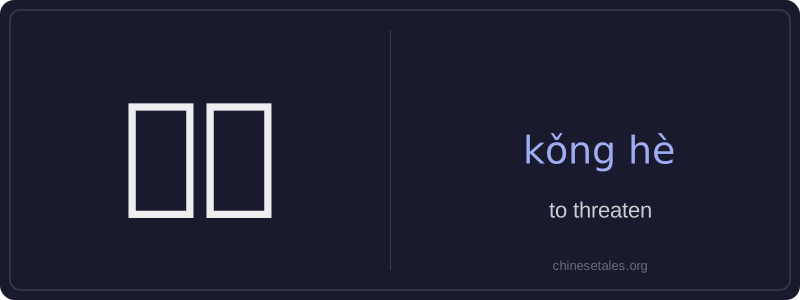
‘恐吓’ (kǒng hè) is a verb meaning 'to threaten' — to intentionally frighten someone, often to force them to act or refrain from acting in a certain way. The first character 恐 (kǒng) means 'fear' or 'dread', and the second character 吓 (hè) means 'to scare' or 'to intimidate'; together, they form a compound that emphasizes deliberate, coercive intimidation. Unlike casual warnings or expressions of concern, 恐吓 carries legal and moral weight — it implies an intent to instill fear for control or gain.
This word is commonly used in formal, legal, or journalistic contexts — such as describing criminal behavior, workplace harassment, or cyberbullying. It’s stronger and more serious than everyday words like ‘warn’ or ‘scold’, and is rarely used in lighthearted or figurative speech. While it can appear in spoken Chinese, it’s more frequent in written reports, news headlines, or official statements where precision about intent matters.
Example Sentences
Related Words
面条
‘面条’ (miàn tiáo) literally means ‘flour str
背后
背后 literally means 'back + behind' and functions
认同
‘认同’ (tóng rèn) is a verb meaning ‘to ident
无论谁
‘无论谁’ (wú lùn shéi) is a pronoun meaning
中学
'Zhōngxué' literally combines 'zhōng' (middle)
见面
见面 literally means 'see face' — combining 见 (t
外语
‘外语’ literally means ‘outside language’ —
认为
‘认为’ (rèn wéi) is a transitive verb meaning