Word Explanation
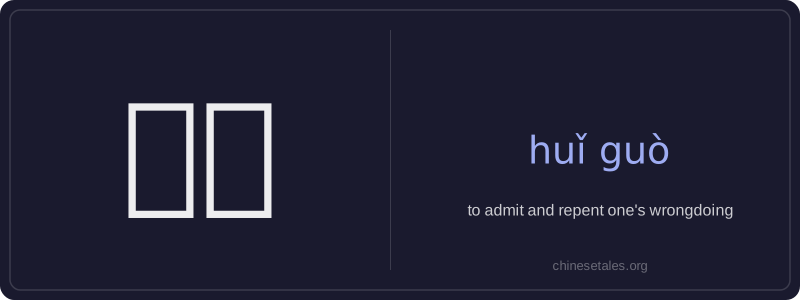
悔过 (huǐ guò) is a formal, written verb meaning 'to admit and sincerely repent one's wrongdoing.' It combines 悔 (huǐ), meaning 'to regret' or 'to feel remorse,' and 过 (guò), meaning 'mistake' or 'wrongdoing' — literally 'regretting one’s mistake.' Unlike casual expressions like 后悔 (hòuhuǐ, 'to regret'), 悔过 carries strong moral weight and implies taking responsibility, often in contexts of discipline, legal consequences, or spiritual reflection.
This word appears frequently in official documents, news reports about misconduct, religious or ethical instruction, and historical narratives. It suggests not just feeling bad but actively acknowledging fault and resolving to change. It is rarely used in light or humorous speech; instead, it conveys gravity and solemnity. The subject is typically a person who has committed a clear violation — personal, social, or institutional — and is now undergoing moral reckoning.
Example Sentences
Related Words
面条
‘面条’ (miàn tiáo) literally means ‘flour str
背后
背后 literally means 'back + behind' and functions
认同
‘认同’ (tóng rèn) is a verb meaning ‘to ident
无论谁
‘无论谁’ (wú lùn shéi) is a pronoun meaning
中学
'Zhōngxué' literally combines 'zhōng' (middle)
见面
见面 literally means 'see face' — combining 见 (t
外语
‘外语’ literally means ‘outside language’ —
认为
‘认为’ (rèn wéi) is a transitive verb meaning