Word Explanation
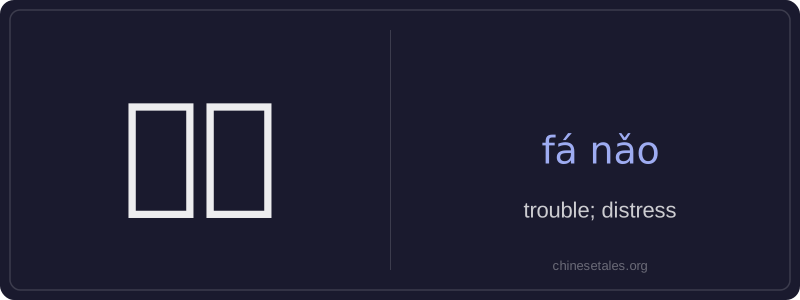
烦恼 (fán nǎo) is a compound noun meaning 'trouble,' 'distress,' or 'mental anguish' — the kind of persistent, low-level worry or irritation that weighs on one’s mind. The first character 烦 (fán) conveys restlessness, impatience, or annoyance; the second, 恼 (nǎo), means 'to vex' or 'to distress.' Together, they emphasize an internal emotional state rather than external problems — it’s not just 'a problem' but the *feeling* of being troubled by it.
This word is commonly used in everyday speech and writing to describe personal, subjective unease: stress about work, relationship doubts, or existential uncertainty. It often appears with verbs like 有 (yǒu, 'to have'), 解决 (jiě jué, 'to resolve'), or 减少 (jiǎn shǎo, 'to reduce'), and can be modified by adjectives like 无尽的 (wú jìn de, 'endless') or 深重的 (shēn zhòng de, 'deep-seated'). While it can refer to minor irritations, it more often signals something emotionally significant and lingering.
Example Sentences
Related Words
面条
‘面条’ (miàn tiáo) literally means ‘flour str
背后
背后 literally means 'back + behind' and functions
认同
‘认同’ (tóng rèn) is a verb meaning ‘to ident
无论谁
‘无论谁’ (wú lùn shéi) is a pronoun meaning
中学
'Zhōngxué' literally combines 'zhōng' (middle)
见面
见面 literally means 'see face' — combining 见 (t
外语
‘外语’ literally means ‘outside language’ —
认为
‘认为’ (rèn wéi) is a transitive verb meaning