Word Explanation
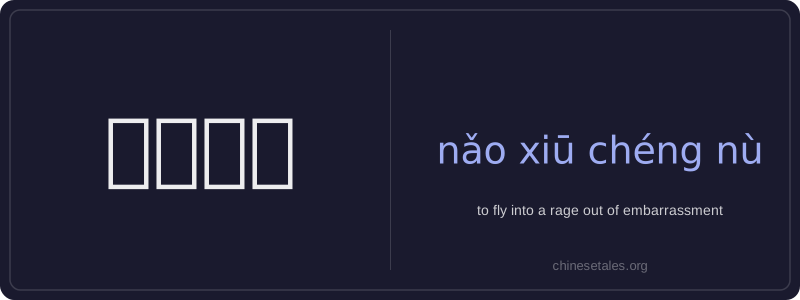
‘恼羞成怒’ is a four-character idiom describing the emotional shift from feeling embarrassed or humiliated to suddenly becoming furious—often as a defensive reaction when one’s pride is wounded or a mistake is exposed. Literally, 恼 means 'to feel annoyed', 羞 means 'to feel ashamed', 成 means 'to become', and 怒 means 'anger' or 'rage'. Together, they depict a rapid psychological transition: embarrassment intensifies until it erupts into uncontrolled anger.
This idiom is commonly used in narrative or descriptive contexts—especially when criticizing impulsive, irrational outbursts triggered by loss of face. It often carries a subtle tone of disapproval or mild irony, implying the person’s anger is disproportionate and stems not from injustice but from wounded ego. It appears frequently in literature, news commentary, and everyday speech when describing heated arguments, online disputes, or public meltdowns after being corrected or mocked.
Example Sentences
Related Words
面条
‘面条’ (miàn tiáo) literally means ‘flour str
背后
背后 literally means 'back + behind' and functions
认同
‘认同’ (tóng rèn) is a verb meaning ‘to ident
无论谁
‘无论谁’ (wú lùn shéi) is a pronoun meaning
中学
'Zhōngxué' literally combines 'zhōng' (middle)
见面
见面 literally means 'see face' — combining 见 (t
外语
‘外语’ literally means ‘outside language’ —
认为
‘认为’ (rèn wéi) is a transitive verb meaning