Word Explanation
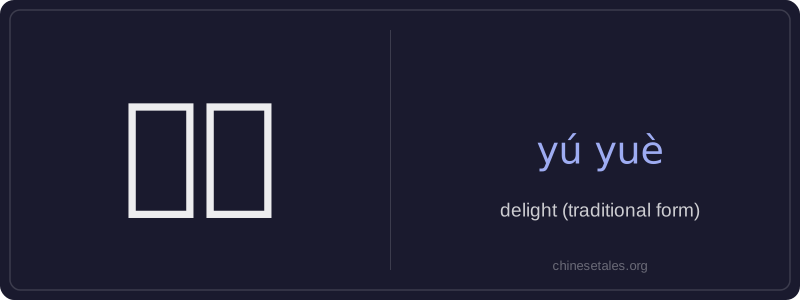
愉悅 (yú yuè) is a formal, literary term meaning 'delight' or 'joyful pleasure'. It combines two semantically similar characters: 愉 (yú), meaning 'pleased' or 'cheerful', and 悅 (yuè), meaning 'to be pleased' or 'delighted'. Together, they form a reduplicated compound that intensifies the sense of inner, serene happiness — not just momentary excitement, but a deeper, calm satisfaction. It’s commonly used in written Chinese, poetry, formal speeches, and psychological or philosophical contexts.
This word often describes emotional states arising from meaningful experiences — such as appreciating art, spending time with loved ones, or achieving personal growth. Unlike colloquial terms like 高兴 (gāo xìng) or 开心 (kāi xīn), 愉悅 carries a refined, almost contemplative tone and rarely appears in casual conversation. It may also function as an adjective before nouns (e.g., 愉悅的心情) or as a predicate noun (e.g., 他感到愉悅).
Example Sentences
Related Words
面条
‘面条’ (miàn tiáo) literally means ‘flour str
背后
背后 literally means 'back + behind' and functions
认同
‘认同’ (tóng rèn) is a verb meaning ‘to ident
无论谁
‘无论谁’ (wú lùn shéi) is a pronoun meaning
中学
'Zhōngxué' literally combines 'zhōng' (middle)
见面
见面 literally means 'see face' — combining 见 (t
外语
‘外语’ literally means ‘outside language’ —
认为
‘认为’ (rèn wéi) is a transitive verb meaning