Word Explanation
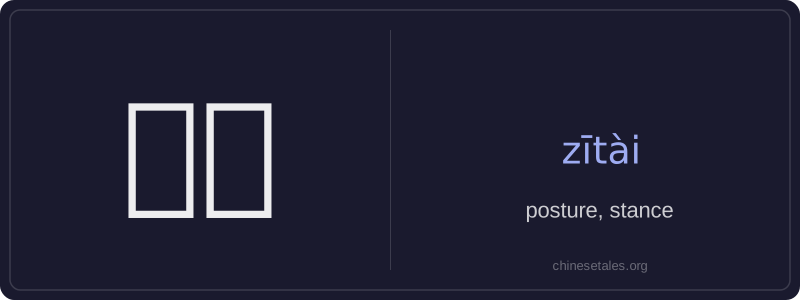
‘姿态’ (zītài) literally combines 姿 (zī), meaning 'graceful form' or 'appearance', and 态 (tài), meaning 'state' or 'manner'. Together, it refers to the physical posture or outward stance a person or animal adopts—whether relaxed, defensive, proud, or submissive. It emphasizes not just body position but also the expressive, often intentional quality behind it.
This word is commonly used in contexts involving body language, performance, sports, animal behavior, and even metaphorical situations—like political or social ‘stances’. While it can describe neutral positions (e.g., sitting posture), it often carries subtle connotations of attitude, intention, or emotional tone. Unlike the more technical term 姿势 (zīshì), which focuses strictly on physical configuration, 姿态 includes psychological or rhetorical nuance—making it frequent in descriptive writing, commentary, and behavioral observation.
Example Sentences
Related Words
面条
‘面条’ (miàn tiáo) literally means ‘flour str
背后
背后 literally means 'back + behind' and functions
认同
‘认同’ (tóng rèn) is a verb meaning ‘to ident
无论谁
‘无论谁’ (wú lùn shéi) is a pronoun meaning
中学
'Zhōngxué' literally combines 'zhōng' (middle)
见面
见面 literally means 'see face' — combining 见 (t
外语
‘外语’ literally means ‘outside language’ —
认为
‘认为’ (rèn wéi) is a transitive verb meaning