Word Explanation
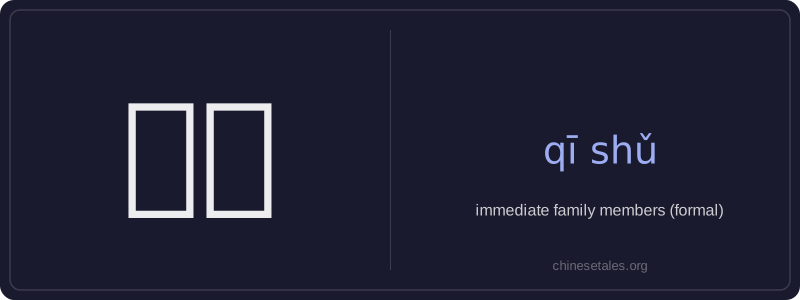
‘戚属’ (qī shǔ) is a formal, literary noun meaning ‘immediate family members’ or ‘close blood relatives’. It combines two characters: 戚 (qī), which historically means ‘intimate’ or ‘related by marriage or blood’, and 属 (shǔ), meaning ‘category’, ‘group’, or ‘affiliated persons’. Together, they denote the inner circle of kin—typically including parents, siblings, children, grandparents, and sometimes uncles/aunts and cousins—especially in official, legal, or ceremonial contexts.
This term carries a respectful, solemn tone and appears frequently in written Chinese—such as obituaries, government notices, inheritance documents, or formal speeches—but is rarely used in casual conversation. Unlike colloquial terms like 家人 (jiārén, ‘family’) or 亲戚 (qīnqi, ‘relatives’), 戚属 emphasizes lineage, shared ancestry, and formal recognition of familial ties, often implying responsibility or mutual obligation.
Example Sentences
Related Words
面条
‘面条’ (miàn tiáo) literally means ‘flour str
背后
背后 literally means 'back + behind' and functions
认同
‘认同’ (tóng rèn) is a verb meaning ‘to ident
无论谁
‘无论谁’ (wú lùn shéi) is a pronoun meaning
中学
'Zhōngxué' literally combines 'zhōng' (middle)
见面
见面 literally means 'see face' — combining 见 (t
外语
‘外语’ literally means ‘outside language’ —
认为
‘认为’ (rèn wéi) is a transitive verb meaning