Word Explanation
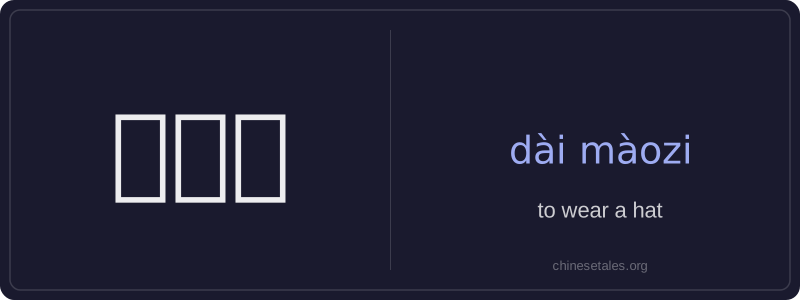
'戴帽子' literally means 'to wear a hat' — it's a compound verb where 戴 (dài) means 'to wear (on the head or body)', 帽 (mào) means 'hat', and 子 (zi) is a common noun suffix that makes 'mào' into the concrete noun 'màozi' (hat). Together, the phrase specifically refers to the physical act of placing a hat on one’s head, not metaphorical uses like 'being blamed' (which requires context and different phrasing).
This verb is commonly used in daily life contexts: describing clothing choices, weather-related preparations, cultural customs (e.g., wearing sun hats at the beach or formal hats at weddings), or children’s activities. It follows standard verb-object structure and takes aspect particles like 了 or 着 when needed (e.g., 戴上了, 戴着). Unlike English, Chinese doesn’t use auxiliary verbs here — just the verb itself with optional modifiers.
Example Sentences
Related Words
面条
‘面条’ (miàn tiáo) literally means ‘flour str
背后
背后 literally means 'back + behind' and functions
认同
‘认同’ (tóng rèn) is a verb meaning ‘to ident
无论谁
‘无论谁’ (wú lùn shéi) is a pronoun meaning
中学
'Zhōngxué' literally combines 'zhōng' (middle)
见面
见面 literally means 'see face' — combining 见 (t
外语
‘外语’ literally means ‘outside language’ —
认为
‘认为’ (rèn wéi) is a transitive verb meaning