Word Explanation
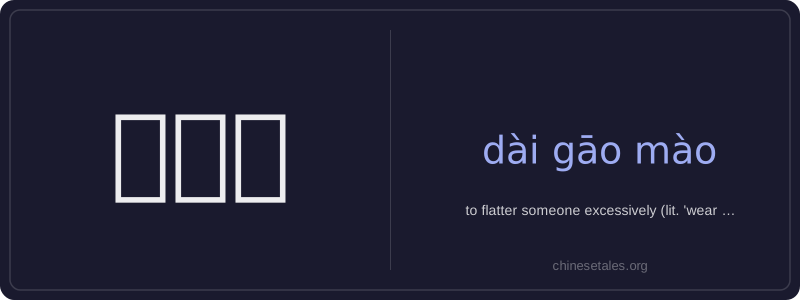
'Dài gāo mào' literally means 'to wear a tall hat,' but it’s an idiom used figuratively to describe excessive, insincere flattery—especially praising someone in order to gain favor, manipulate, or curry approval. The 'tall hat' symbolizes inflated praise that makes the person feel overly important or superior, much like wearing an impractically high ceremonial hat. Historically, it evokes Qing dynasty officials who wore tall hats as symbols of rank, and flatterers were said to metaphorically 'put tall hats on' their superiors to win influence.
This expression is commonly used in informal spoken and written Chinese, often with a slightly negative or humorous tone. It implies the flattery is transparent, self-serving, or disproportionate to reality—and the target may be aware (or should be) of the speaker’s ulterior motive. It appears frequently in workplace banter, political commentary, family dynamics, and social satire, especially when someone is being overly deferential to authority or status.
Example Sentences
Related Words
面条
‘面条’ (miàn tiáo) literally means ‘flour str
背后
背后 literally means 'back + behind' and functions
认同
‘认同’ (tóng rèn) is a verb meaning ‘to ident
无论谁
‘无论谁’ (wú lùn shéi) is a pronoun meaning
中学
'Zhōngxué' literally combines 'zhōng' (middle)
见面
见面 literally means 'see face' — combining 见 (t
外语
‘外语’ literally means ‘outside language’ —
认为
‘认为’ (rèn wéi) is a transitive verb meaning