Word Explanation
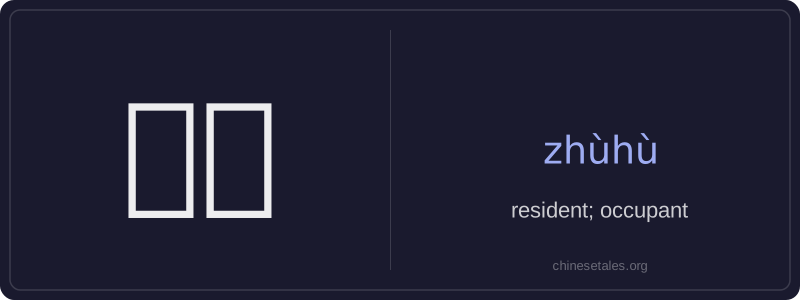
住户 (zhùhù) literally combines 住 (zhù, 'to live/reside') and 户 (hù, 'household/family unit'), meaning a person or family who lives in a particular residence — such as an apartment, house, or dormitory room. It emphasizes legal or practical occupancy rather than mere presence; for example, a tenant paying rent or a family registered at an address is considered a 住户.
This term is commonly used in formal, administrative, or community contexts — like property management, neighborhood notices, census forms, or building regulations. It’s neutral in register and often appears in plural form (住户们) when referring to multiple residents. Unlike more casual terms like 居民 (jūmín), which can refer broadly to inhabitants of a city or region, 住户 specifically denotes people occupying a defined dwelling space.
Example Sentences
Related Words
面条
‘面条’ (miàn tiáo) literally means ‘flour str
背后
背后 literally means 'back + behind' and functions
认同
‘认同’ (tóng rèn) is a verb meaning ‘to ident
无论谁
‘无论谁’ (wú lùn shéi) is a pronoun meaning
中学
'Zhōngxué' literally combines 'zhōng' (middle)
见面
见面 literally means 'see face' — combining 见 (t
外语
‘外语’ literally means ‘outside language’ —
认为
‘认为’ (rèn wéi) is a transitive verb meaning