Word Explanation
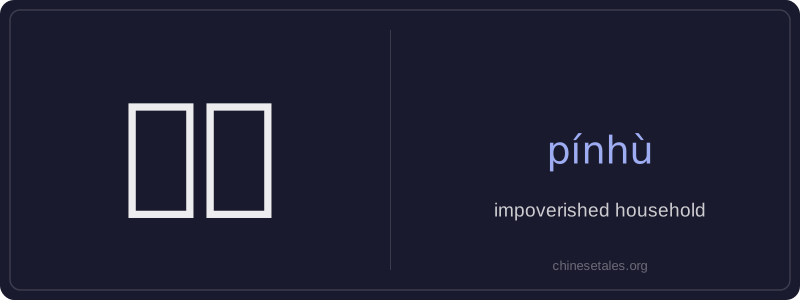
‘贫户’ (pín hù) literally combines 贫 (pín, meaning ‘poor’ or ‘impoverished’) and 户 (hù, meaning ‘household’ or ‘family unit’). Together, it refers specifically to a household officially classified as living below the poverty line—often in government or social welfare contexts. It is a formal, administrative term used in policy documents, census reports, and poverty-alleviation programs, rather than in casual speech.
The word emphasizes economic status at the family level and implies eligibility for state assistance, such as subsidies, housing support, or education aid. Unlike broader terms like 穷人 (qióngrén, ‘poor people’), 贫户 carries institutional weight: it denotes households formally registered and verified by local authorities. It frequently appears in phrases like 贫户档案 (pín hù dàng’àn, ‘impoverished household file’) or 贫户识别 (pín hù shíbié, ‘identification of impoverished households’).
Example Sentences
Related Words
面条
‘面条’ (miàn tiáo) literally means ‘flour str
背后
背后 literally means 'back + behind' and functions
认同
‘认同’ (tóng rèn) is a verb meaning ‘to ident
无论谁
‘无论谁’ (wú lùn shéi) is a pronoun meaning
中学
'Zhōngxué' literally combines 'zhōng' (middle)
见面
见面 literally means 'see face' — combining 见 (t
外语
‘外语’ literally means ‘outside language’ —
认为
‘认为’ (rèn wéi) is a transitive verb meaning