铭
Character Story & Explanation
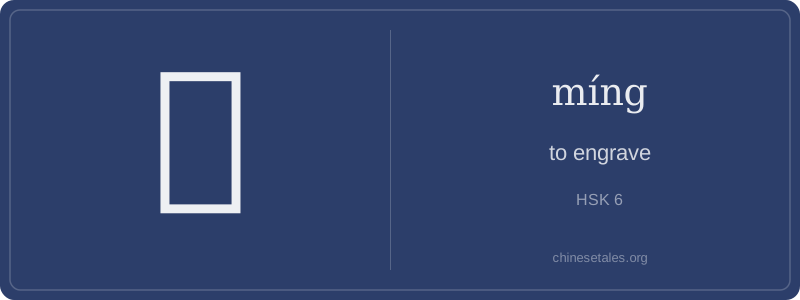
The earliest form of 铭 appears on Shang-Zhou bronze vessels as a pictograph combining a metal vessel (often represented by a simplified ‘vessel’ shape) and a phonetic element suggesting ‘name’ or ‘sound.’ By the Warring States period, the left side solidified into the metal radical 钅 (jin), reflecting its association with inscriptions cast into bronze — the most durable medium of the time. The right side evolved from the ancient character for ‘name’ (名) but gradually stylized into the modern 冥 (míng), which also conveys ‘deep, profound’ — hinting that these inscriptions weren’t superficial, but meant to resonate deeply across time.
This visual logic shaped its meaning: 铭 wasn’t just about scratching letters — it was about forging truth into an unyielding surface. In the Zuo Zhuan, ministers urged rulers to ‘铭之金石’ (engrave it on metal and stone) to ensure moral commitments endured. Later, Liu Xie’s Wen Xin Diao Long praised ‘铭’ as one of the highest literary forms — concise, weighty, and commemorative. Even today, when someone says ‘铭感五内’, they’re not just ‘grateful’ — they’re saying their gratitude has been *forged* into their innermost being, like bronze cast in fire.
At its heart, 铭 (míng) isn’t just ‘to engrave’ — it’s about making something *indelible*: carving words into bronze or stone so they survive centuries. That physical act carries deep emotional weight in Chinese: to 铭 means to etch a memory, value, or vow into your soul — think ‘I’ll never forget this’ or ‘forever engraved in my heart.’ It’s not casual; it implies solemnity, permanence, and intentionality.
Grammatically, 铭 is almost always used in compound verbs (e.g., 铭记, 铭刻) or as a noun meaning ‘inscription’ (e.g., 墓铭, 金属铭文). You’ll rarely see it alone as a verb in modern speech — saying ‘我铭它’ would sound archaic or poetic. Instead, learners should master 铭记 (míngjì, ‘to engrave in memory’) and 铭刻 (míngkè, ‘to carve indelibly’), both common in formal writing and speeches. Watch out: don’t confuse it with passive-sounding English ‘remember’ — 铭 always implies active, deliberate internalization.
Culturally, 铭 reflects China’s reverence for enduring wisdom: ancient bronze zhong bells bore ritual inscriptions (金文铭文), and today leaders use 铭记 to invoke collective memory — like ‘铭记历史’ (‘engrave history in our hearts’). A classic learner mistake is overusing 铭 as a standalone verb or misplacing it in colloquial contexts. Remember: if it feels too light or casual, you probably need 记住 instead.