Word Explanation
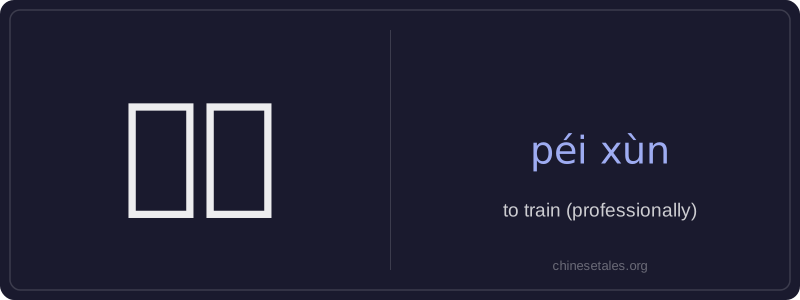
培训 (péi xùn) means 'to train'—especially in a professional, vocational, or organizational context. It combines 培 (péi), meaning 'to cultivate' or 'to foster', and 训 (xùn), meaning 'to instruct' or 'to discipline'. Together, they convey the idea of systematically developing someone’s skills, knowledge, or behavior through guided learning. Unlike general study (学习) or self-practice, 培训 implies structured instruction, often led by experts or institutions, and is commonly used for workplace onboarding, certification programs, safety drills, or technical upskilling.
This word is frequently used as both a verb ('to train') and a noun ('training'). As a noun, it often appears with measure words like 次 (a session) or 课程 (a course). It carries a formal, institutional tone and is rarely used for casual or personal learning (e.g., teaching a friend to cook). You’ll see it in company announcements, government policy documents, HR communications, and healthcare settings—such as training nurses on new protocols or staff on infection control procedures.
Example Sentences
Related Words
国语
‘Guó yǔ’ literally means 'national language'—
无论谁
‘无论谁’ (wú lùn shéi) is a pronoun meaning
外语
‘外语’ literally means ‘outside language’ —
面条
‘面条’ (miàn tiáo) literally means ‘flour str
不对
不对 (bù duì) literally combines 不 (bù), meani
认为
‘认为’ (rèn wéi) is a transitive verb meaning
认同
‘认同’ (tóng rèn) is a verb meaning ‘to ident
中学
'Zhōngxué' literally combines 'zhōng' (middle)