Word Explanation
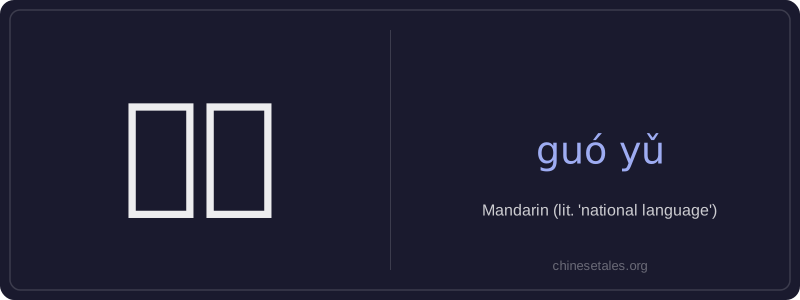
‘Guó yǔ’ literally means 'national language'—‘guó’ (国) means 'country' or 'nation', and ‘yǔ’ (语) means 'language' or 'speech'. Historically, it was the official term for Standard Mandarin in early 20th-century China and remains the formal name for Mandarin in Taiwan today. While mainland China now primarily uses ‘Pǔtōnghuà’ (common speech), ‘guó yǔ’ is still widely understood and used in educational, governmental, and media contexts across the Chinese-speaking world.
The term carries a sense of official status and cultural identity—it’s not just about pronunciation or grammar, but about linguistic standardization and national unity. It’s commonly taught in schools, used in broadcasting standards, and appears on language proficiency exams. Unlike regional dialects such as Cantonese or Shanghainese, ‘guó yǔ’ refers specifically to the standardized form based on the Beijing dialect, with prescribed phonology, vocabulary, and grammar.
Example Sentences
Related Words
见面
见面 literally means 'see face' — combining 见 (t
后来
Later (hòulái) is an adverb meaning 'afterwards'
背后
背后 literally means 'back + behind' and functions
我的
我的 (wǒ de) is a possessive pronoun meaning 'my'
这么
这么 (zhè me) is an adverb meaning 'so' or 'this
中学
'Zhōngxué' literally combines 'zhōng' (middle)
前面
前面 (qián miàn) literally combines 前 (qián, '
面条
‘面条’ (miàn tiáo) literally means ‘flour str