Word Explanation
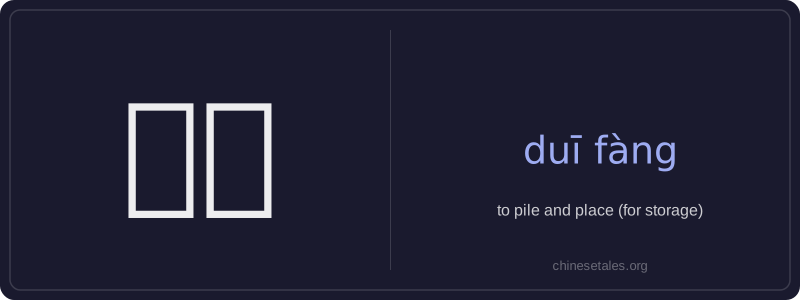
'Duī fàng' is a compound verb meaning 'to pile and place'—typically for organized storage. The first character 堆 (duī) means 'to pile up' or 'heap', suggesting vertical accumulation, while the second character 放 (fàng) means 'to place' or 'to put', emphasizing intentional positioning. Together, they convey purposeful arrangement of items in layers or stacks, usually to save space or prepare for later use. This verb implies both physical action and functional intent—not just random stacking, but deliberate placement with order in mind.
You’ll commonly hear 'duī fàng' in everyday domestic, office, or warehouse contexts: arranging boxes in a garage, stacking books on a shelf, or organizing tools in a workshop. It often appears in instructions ('Please stack and store the boxes neatly') or descriptions of tidy spaces. Unlike casual verbs like 摆 (bǎi, 'to arrange') or 堆 (duī) alone (which can imply messiness), 'duī fàng' carries a neutral-to-positive connotation of methodical storage.
Example Sentences
Related Words
国语
‘Guó yǔ’ literally means 'national language'—
无论谁
‘无论谁’ (wú lùn shéi) is a pronoun meaning
外语
‘外语’ literally means ‘outside language’ —
面条
‘面条’ (miàn tiáo) literally means ‘flour str
不对
不对 (bù duì) literally combines 不 (bù), meani
认为
‘认为’ (rèn wéi) is a transitive verb meaning
认同
‘认同’ (tóng rèn) is a verb meaning ‘to ident
中学
'Zhōngxué' literally combines 'zhōng' (middle)