Word Explanation
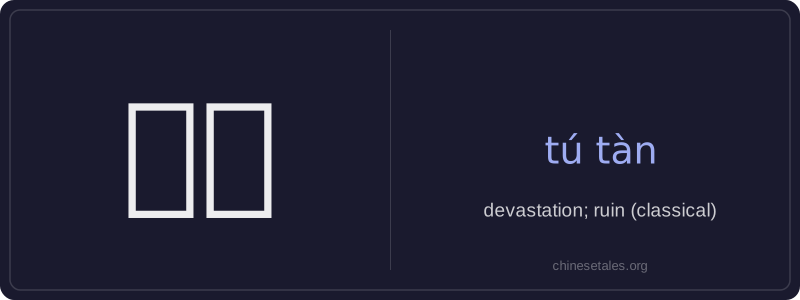
涂炭 is a classical Chinese compound meaning 'devastation' or 'ruin', often describing extreme suffering, destruction, or desolation. Literally, 涂 means 'mud' or 'slime', and 炭 means 'charcoal' — together they evoke the grim image of people covered in mud and soot, symbolizing utter ruin and misery, as seen in war-torn or disaster-stricken lands. This term originates from ancient texts like the Book of Documents, where it describes the plight of common people under tyrannical rule.
Though rare in everyday spoken Chinese, 涂炭 appears in formal writing, historical narratives, political rhetoric, and literary expressions to emphasize profound devastation — especially human suffering caused by war, oppression, or natural calamity. It carries strong emotional weight and moral gravity, almost always used with verbs like 遭受 (to suffer), 陷入 (to fall into), or 拯救…于… (to rescue…from…). Its tone is solemn and elevated, never casual or humorous.
Example Sentences
Related Words
国语
‘Guó yǔ’ literally means 'national language'—
无论谁
‘无论谁’ (wú lùn shéi) is a pronoun meaning
外语
‘外语’ literally means ‘outside language’ —
面条
‘面条’ (miàn tiáo) literally means ‘flour str
不对
不对 (bù duì) literally combines 不 (bù), meani
认为
‘认为’ (rèn wéi) is a transitive verb meaning
认同
‘认同’ (tóng rèn) is a verb meaning ‘to ident
中学
'Zhōngxué' literally combines 'zhōng' (middle)