Word Explanation
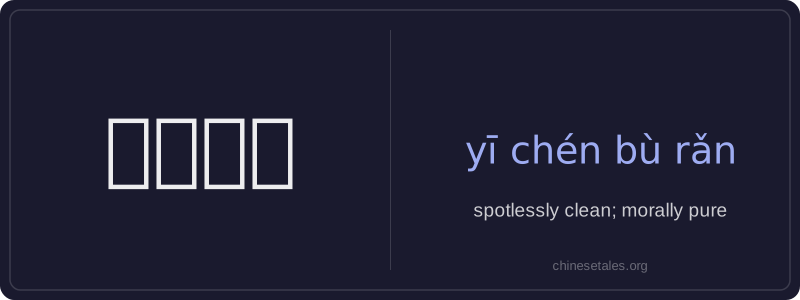
The idiom 一尘不染 literally means 'not a single speck of dust sticks' — combining 一 (one), 尘 (dust), 不 (not), and 染 (to stain or soil). It originated in Buddhist texts to describe absolute mental purity, free from worldly defilements. Today, it’s used both literally and figuratively: literally for physical cleanliness so extreme that not even microscopic dust is visible, and figuratively for moral integrity, sincerity, or untarnished character.
This four-character idiom functions as a descriptive adjective, typically placed before a noun (e.g., 一尘不染的房间) or after 是/显得/看起来 (e.g., 房间一尘不染). It carries a formal, literary tone and is common in written Chinese, advertising (especially for cleaning products or luxury interiors), and moral discourse. While vivid and expressive, it’s rarely used in casual speech — learners should avoid overusing it in everyday conversation where simpler terms like 干净 or 洁净 would sound more natural.
Example Sentences
Related Words
国语
‘Guó yǔ’ literally means 'national language'—
无论谁
‘无论谁’ (wú lùn shéi) is a pronoun meaning
外语
‘外语’ literally means ‘outside language’ —
面条
‘面条’ (miàn tiáo) literally means ‘flour str
不对
不对 (bù duì) literally combines 不 (bù), meani
认为
‘认为’ (rèn wéi) is a transitive verb meaning
认同
‘认同’ (tóng rèn) is a verb meaning ‘to ident
中学
'Zhōngxué' literally combines 'zhōng' (middle)