Word Explanation
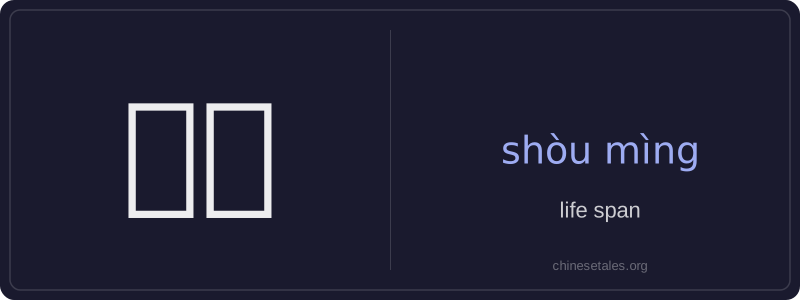
寿 (shòu) means 'longevity' or 'life,' often associated with blessings, celebration, and old age — think of the character used in birthday greetings like '寿星' (shòuxīng, 'the God of Longevity'). 命 (mìng) means 'life,' 'fate,' or 'destiny,' and appears in words like '生命' (shēngmìng, 'life') and '命运' (mìngyùn, 'fate'). Together, 寿命 literally combines 'long life' and 'life' to mean 'life span' — the total length of time a living being is expected to live.
This word is commonly used when discussing biology, medicine, or everyday comparisons: for example, comparing human life span with that of animals or machines (though for machines, '使用寿命' is more precise). It’s neutral in register — appropriate in both formal reports and casual conversation — and often appears with verbs like '延长' (prolong), '缩短' (shorten), or '预测' (predict). While it can refer to any organism, it’s most frequently used for humans, pets, livestock, and wild animals.
Example Sentences
Related Words
国语
‘Guó yǔ’ literally means 'national language'—
无论谁
‘无论谁’ (wú lùn shéi) is a pronoun meaning
外语
‘外语’ literally means ‘outside language’ —
面条
‘面条’ (miàn tiáo) literally means ‘flour str
不对
不对 (bù duì) literally combines 不 (bù), meani
认为
‘认为’ (rèn wéi) is a transitive verb meaning
认同
‘认同’ (tóng rèn) is a verb meaning ‘to ident
中学
'Zhōngxué' literally combines 'zhōng' (middle)