Word Explanation
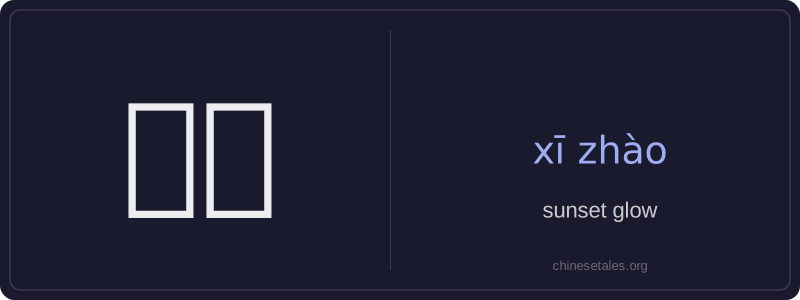
‘夕照’ literally combines 夕 (xī), meaning ‘evening’ or ‘sunset’, and 照 (zhào), meaning ‘to shine’ or ‘light’. Together, it refers to the warm, soft light of the setting sun—often evoking serene, poetic, or nostalgic imagery. Unlike the neutral term 日落 (rìluò, ‘sunset’), 夕照 emphasizes the visual quality of the light itself: its color, diffusion, and gentle radiance across landscapes, water, or architecture.
This word is commonly used in literary, descriptive, or artistic contexts—such as poetry, travel writing, photography captions, or scenic descriptions. It appears frequently in classical and modern Chinese literature to convey tranquility, transition, or quiet beauty. While not colloquial in everyday speech, it’s widely understood and appreciated for its aesthetic resonance. You’ll often see it paired with nouns like 山 (shān, mountain), 湖 (hú, lake), or 城 (chéng, city) to specify where the glow falls.
Example Sentences
Related Words
国语
‘Guó yǔ’ literally means 'national language'—
无论谁
‘无论谁’ (wú lùn shéi) is a pronoun meaning
外语
‘外语’ literally means ‘outside language’ —
面条
‘面条’ (miàn tiáo) literally means ‘flour str
不对
不对 (bù duì) literally combines 不 (bù), meani
认为
‘认为’ (rèn wéi) is a transitive verb meaning
认同
‘认同’ (tóng rèn) is a verb meaning ‘to ident
中学
'Zhōngxué' literally combines 'zhōng' (middle)