Word Explanation
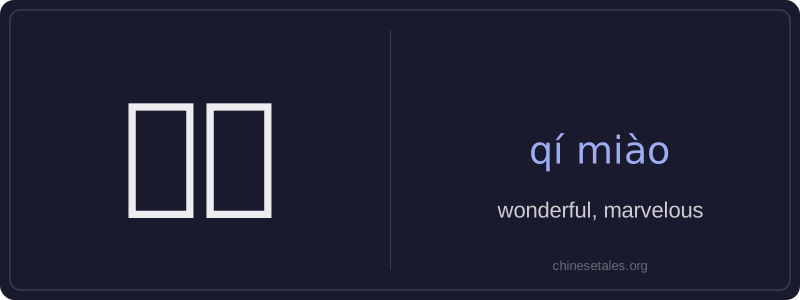
奇妙 (qí miào) is an adjective meaning 'wonderful' or 'marvelous' — describing something that inspires awe, curiosity, or delight because it is unusual, beautiful, or unexpectedly impressive. The character 奇 means 'strange', 'rare', or 'extraordinary', while 妙 means 'subtle', 'excellent', or 'ingenious'. Together, they emphasize not just strangeness but a positive, captivating kind of uniqueness — like the intricate patterns on a butterfly’s wings or the synchronized flight of starlings.
This word is commonly used to describe natural phenomena, artistic creations, scientific discoveries, or everyday moments that feel magically special. It carries a warm, appreciative tone and is frequently found in descriptive writing, children’s books, nature documentaries, and casual speech when expressing genuine admiration. Unlike more formal synonyms, 奇妙 feels approachable and heartfelt — often evoking childlike wonder rather than detached analysis.
Example Sentences
Related Words
国语
‘Guó yǔ’ literally means 'national language'—
无论谁
‘无论谁’ (wú lùn shéi) is a pronoun meaning
外语
‘外语’ literally means ‘outside language’ —
面条
‘面条’ (miàn tiáo) literally means ‘flour str
不对
不对 (bù duì) literally combines 不 (bù), meani
认为
‘认为’ (rèn wéi) is a transitive verb meaning
认同
‘认同’ (tóng rèn) is a verb meaning ‘to ident
中学
'Zhōngxué' literally combines 'zhōng' (middle)