Word Explanation
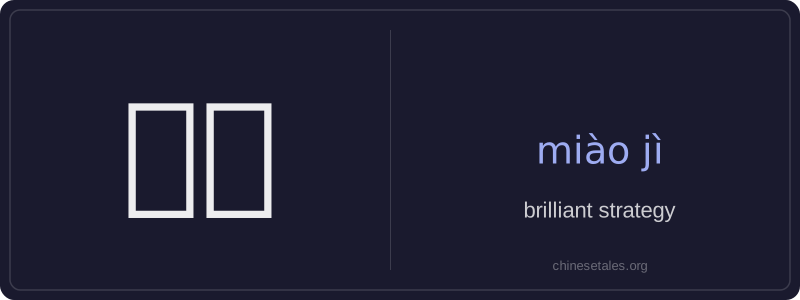
‘妙计’ literally combines 妙 (miào), meaning 'wonderful', 'clever', or 'subtle', and 计 (jì), meaning 'plan', 'scheme', or 'strategy'. Together, it denotes a highly ingenious, unexpectedly effective strategy—often one that solves a difficult problem with elegance and minimal effort. It carries a positive, admiring connotation and is frequently used in historical narratives, military contexts, or everyday praise for clever problem-solving.
The term appears often in classical Chinese literature (e.g., the Romance of the Three Kingdoms) and modern storytelling to highlight a character’s quick wit or resourcefulness. While formal in tone, it’s also used colloquially—especially when describing a surprisingly smart solution to a tricky situation, like outsmarting a rival or bypassing an obstacle. It implies both intelligence and practical success, not just theoretical cleverness.
Example Sentences
Related Words
国语
‘Guó yǔ’ literally means 'national language'—
无论谁
‘无论谁’ (wú lùn shéi) is a pronoun meaning
外语
‘外语’ literally means ‘outside language’ —
面条
‘面条’ (miàn tiáo) literally means ‘flour str
不对
不对 (bù duì) literally combines 不 (bù), meani
认为
‘认为’ (rèn wéi) is a transitive verb meaning
认同
‘认同’ (tóng rèn) is a verb meaning ‘to ident
中学
'Zhōngxué' literally combines 'zhōng' (middle)