Word Explanation
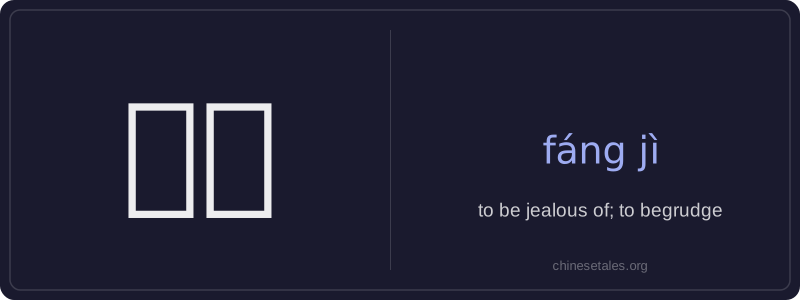
妨忌 is a formal or literary verb meaning 'to be jealous of' or 'to begrudge'—especially when someone resents another’s success, advantages, or good fortune and feels it diminishes their own standing. The character 妨 (fáng) originally means 'to hinder' or 'to obstruct', while 忌 (jì) means 'to be jealous of' or 'to fear and avoid'. Together, they convey the sense of jealousy that actively impedes or undermines—often emotionally or socially, not physically. It's more intense than simple jealousy; it implies resentment strong enough to cause ill will or passive hostility.
This word appears most often in written Chinese—such as essays, historical narratives, or moral commentary—and is rarely used in casual speech. It commonly describes interpersonal dynamics where status, reputation, or opportunity is perceived as zero-sum: one person’s gain feels like another’s loss. While related to envy, 妨忌 carries a stronger connotation of moral disapproval and social tension.
Example Sentences
Related Words
国语
‘Guó yǔ’ literally means 'national language'—
无论谁
‘无论谁’ (wú lùn shéi) is a pronoun meaning
外语
‘外语’ literally means ‘outside language’ —
面条
‘面条’ (miàn tiáo) literally means ‘flour str
不对
不对 (bù duì) literally combines 不 (bù), meani
认为
‘认为’ (rèn wéi) is a transitive verb meaning
认同
‘认同’ (tóng rèn) is a verb meaning ‘to ident
中学
'Zhōngxué' literally combines 'zhōng' (middle)