Word Explanation
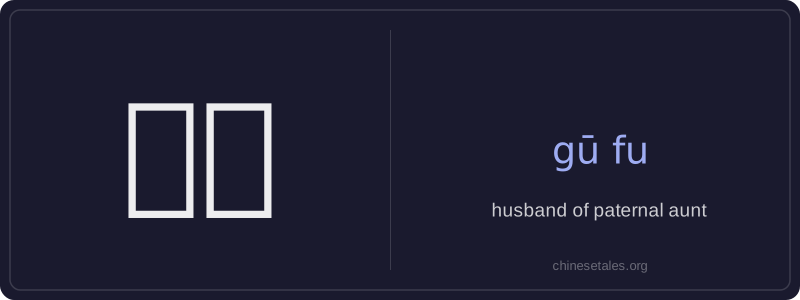
'Gūfu' refers specifically to the husband of one's paternal aunt — that is, the man married to your father's sister. The first character 姑 (gū) means 'paternal aunt', while 父 (fù) means 'father' or 'male elder'; together, they form a kinship term indicating a familial relationship by marriage, not blood. Unlike English, which often uses generic terms like 'uncle', Chinese distinguishes relatives precisely by lineage (paternal vs. maternal) and marital connection.
This term is used in formal family settings, genealogical discussions, or when introducing relatives. It carries respectful connotation and is typically addressed with titles like 'Gūfu' or 'Gūfu hǎo' (Hello, Uncle). It is not used for maternal aunts’ husbands — that role is filled by 'Yífu'. Understanding such distinctions helps learners navigate Chinese family conversations accurately and respectfully.
Example Sentences
Related Words
国语
‘Guó yǔ’ literally means 'national language'—
无论谁
‘无论谁’ (wú lùn shéi) is a pronoun meaning
外语
‘外语’ literally means ‘outside language’ —
面条
‘面条’ (miàn tiáo) literally means ‘flour str
不对
不对 (bù duì) literally combines 不 (bù), meani
认为
‘认为’ (rèn wéi) is a transitive verb meaning
认同
‘认同’ (tóng rèn) is a verb meaning ‘to ident
中学
'Zhōngxué' literally combines 'zhōng' (middle)