Word Explanation
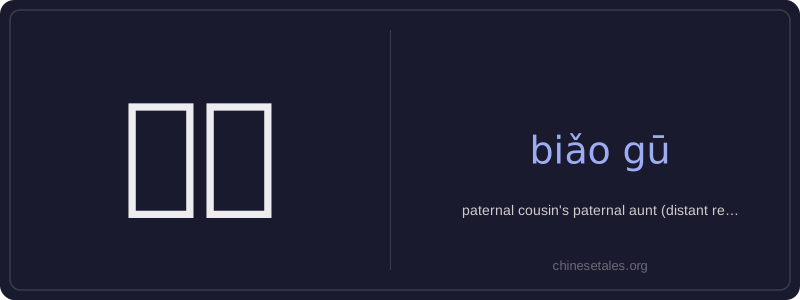
‘表姑’ (biǎo gū) is a kinship term referring specifically to the paternal aunt of one’s paternal cousin — that is, the sister of one’s father’s cousin. The character ‘表’ (biǎo) indicates a collateral or ‘distant’ blood relationship through marriage or non-direct lineage (as opposed to ‘亲’, qīn), while ‘姑’ (gū) means ‘aunt’ — specifically a father’s sister. Together, ‘表姑’ denotes a more distant female relative on the father’s side, not part of the immediate nuclear family but still recognized in formal Chinese kinship systems.
This term is used mainly in traditional or extended-family contexts, especially when introducing relatives, writing family trees, or discussing genealogy. It reflects the precision and hierarchy embedded in Chinese familial terminology — where relationships are distinguished by generation, gender, lineage (paternal vs. maternal), and closeness. Though less commonly used in casual daily speech among urban youth, it remains essential for understanding family narratives, ancestral records, and formal introductions at weddings or reunions.
Example Sentences
Related Words
国语
‘Guó yǔ’ literally means 'national language'—
无论谁
‘无论谁’ (wú lùn shéi) is a pronoun meaning
外语
‘外语’ literally means ‘outside language’ —
面条
‘面条’ (miàn tiáo) literally means ‘flour str
不对
不对 (bù duì) literally combines 不 (bù), meani
认为
‘认为’ (rèn wéi) is a transitive verb meaning
认同
‘认同’ (tóng rèn) is a verb meaning ‘to ident
中学
'Zhōngxué' literally combines 'zhōng' (middle)