Word Explanation
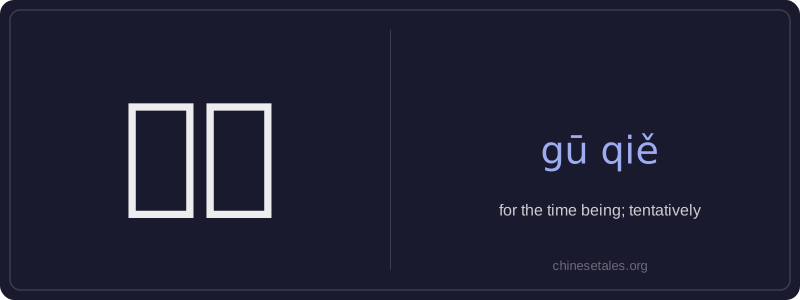
姑且 is an adverb meaning 'for the time being' or 'tentatively'—it expresses a temporary, provisional acceptance or action, often when a better option isn’t available or when one is willing to set aside doubts or objections. The character 姑 originally means 'aunt' but here functions as a prefix indicating 'provisional' or 'for now'; 且 means 'moreover' or 'still', reinforcing the sense of continuation despite uncertainty. Together, they form a fixed compound used to soften suggestions, justify compromises, or acknowledge imperfection while moving forward.
This word appears frequently in spoken and written Chinese, especially in discussions involving compromise, practical decisions, or polite deferral. It carries a slightly literary or formal tone compared to colloquial alternatives like 先 (xiān) or 暂时 (zànshí), and is commonly used before verbs or entire clauses. It’s rarely used in isolation and almost always modifies an action or judgment, signaling that the speaker recognizes limitations but chooses pragmatism.
Example Sentences
Related Words
国语
‘Guó yǔ’ literally means 'national language'—
无论谁
‘无论谁’ (wú lùn shéi) is a pronoun meaning
外语
‘外语’ literally means ‘outside language’ —
面条
‘面条’ (miàn tiáo) literally means ‘flour str
不对
不对 (bù duì) literally combines 不 (bù), meani
认为
‘认为’ (rèn wéi) is a transitive verb meaning
认同
‘认同’ (tóng rèn) is a verb meaning ‘to ident
中学
'Zhōngxué' literally combines 'zhōng' (middle)