Word Explanation
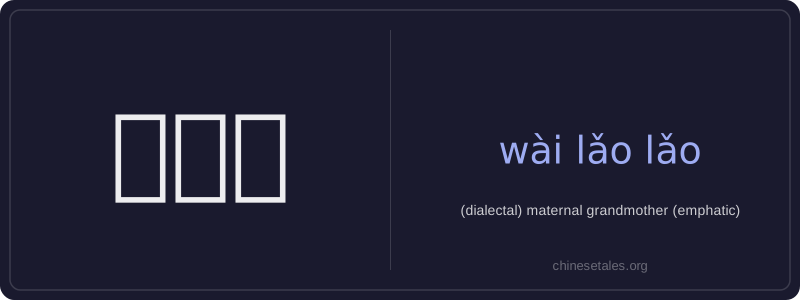
‘外姥姥’ is a dialectal, affectionate, and emphatic term for one’s maternal grandmother — the mother of one’s mother. The character ‘外’ (wài) literally means ‘outside’ or ‘maternal,’ distinguishing this grandmother from the paternal side (‘姥姥’ alone can be ambiguous, but ‘外姥姥’ explicitly signals the mother’s mother). The reduplicated ‘姥姥’ (lǎo lǎo) adds warmth, familiarity, and often reflects childlike or regional speech — common in Northern Mandarin dialects, especially in informal family settings.
This term carries strong emotional connotation: it suggests closeness, nostalgia, or intergenerational care. Unlike formal terms like ‘外祖母’ (wài zǔmǔ), ‘外姥姥’ is rarely used in writing or official contexts; it appears most often in spoken language, storytelling, or when recalling childhood memories. It’s not a standard kinship term in all regions — many Southern speakers may use ‘外婆’ (wài pó) instead — so its usage is geographically and socially marked.
Example Sentences
Related Words
国语
‘Guó yǔ’ literally means 'national language'—
无论谁
‘无论谁’ (wú lùn shéi) is a pronoun meaning
外语
‘外语’ literally means ‘outside language’ —
面条
‘面条’ (miàn tiáo) literally means ‘flour str
不对
不对 (bù duì) literally combines 不 (bù), meani
认为
‘认为’ (rèn wéi) is a transitive verb meaning
认同
‘认同’ (tóng rèn) is a verb meaning ‘to ident
中学
'Zhōngxué' literally combines 'zhōng' (middle)