Word Explanation
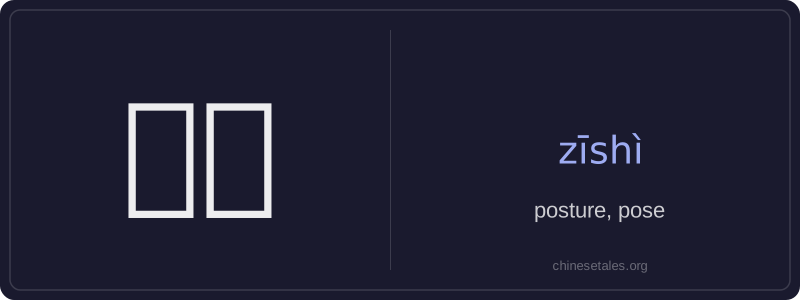
姿势 (zīshì) means 'posture' or 'pose'—the way a person holds their body while standing, sitting, or moving. The first character 姿 (zī) conveys 'grace,' 'bearing,' or 'appearance,' often relating to outward form or elegance; the second character 势 (shì) means 'power,' 'tendency,' or 'situation,' but here it contributes the sense of 'configuration' or 'arrangement.' Together, they emphasize the intentional or characteristic physical alignment of the body.
This word is commonly used in health, fitness, dance, martial arts, and ergonomics contexts—for example, when advising someone to correct poor sitting posture or demonstrating a yoga pose. It can refer to both natural, habitual postures and deliberately adopted ones, such as a performer’s stage pose or a patient’s recovery position. Unlike the more casual term 姿态 (zītài), which often carries figurative or attitudinal meaning ('attitude'), 姿势 is primarily physical and concrete.
Example Sentences
Related Words
国语
‘Guó yǔ’ literally means 'national language'—
无论谁
‘无论谁’ (wú lùn shéi) is a pronoun meaning
外语
‘外语’ literally means ‘outside language’ —
面条
‘面条’ (miàn tiáo) literally means ‘flour str
不对
不对 (bù duì) literally combines 不 (bù), meani
认为
‘认为’ (rèn wéi) is a transitive verb meaning
认同
‘认同’ (tóng rèn) is a verb meaning ‘to ident
中学
'Zhōngxué' literally combines 'zhōng' (middle)