Word Explanation
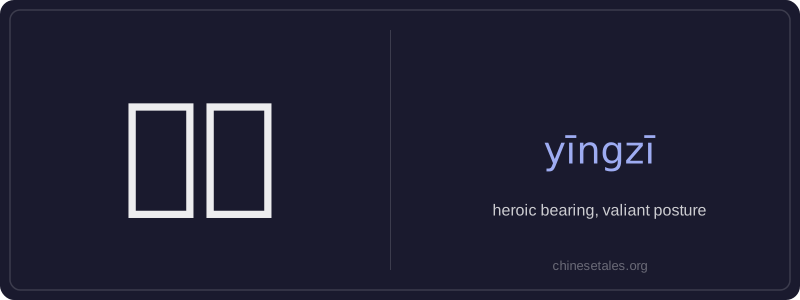
英姿 (yīngzī) is a literary noun meaning 'heroic bearing' or 'valiant posture'—it evokes the dignified, courageous, and commanding presence of a hero. The first character 英 (yīng) means 'heroic', 'outstanding', or 'excellent', often used in words like 英雄 (yīngxióng, 'hero') or 英才 (yīngcái, 'gifted person'). The second character 姿 (zī) means 'posture', 'bearing', or 'demeanor', as in 姿势 (zīshì, 'pose') or 风姿 (fēngzī, 'graceful bearing'). Together, 英姿 emphasizes not just physical stance but the aura of strength, confidence, and nobility radiating from a person—or even an animal—whose appearance commands respect.
This term appears frequently in formal writing, poetry, news reports about military personnel or athletes, and descriptive passages about majestic animals like eagles, horses, or lions. It carries a strong positive connotation and is rarely used ironically or casually—it’s elevated, respectful, and often emotionally stirring.
Example Sentences
Related Words
国语
‘Guó yǔ’ literally means 'national language'—
无论谁
‘无论谁’ (wú lùn shéi) is a pronoun meaning
外语
‘外语’ literally means ‘outside language’ —
面条
‘面条’ (miàn tiáo) literally means ‘flour str
不对
不对 (bù duì) literally combines 不 (bù), meani
认为
‘认为’ (rèn wéi) is a transitive verb meaning
认同
‘认同’ (tóng rèn) is a verb meaning ‘to ident
中学
'Zhōngxué' literally combines 'zhōng' (middle)