Word Explanation
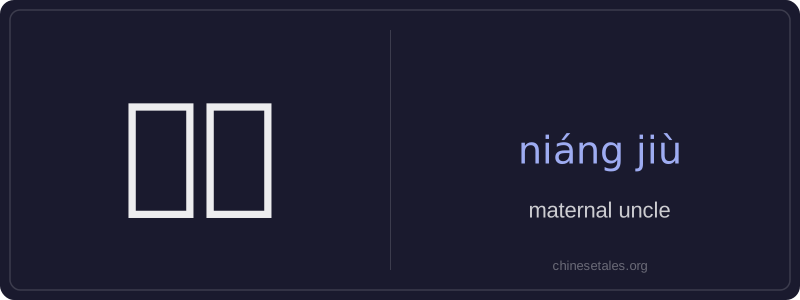
‘娘舅’ (niáng jiù) is a compound noun meaning 'maternal uncle'—specifically, the brother of one’s mother. The first character 娘 (niáng) means 'mother' and historically carries connotations of closeness and familiarity; the second character 舅 (jiù) means 'maternal uncle' on its own. Together, they form a traditional, slightly formal or literary term that emphasizes the maternal lineage. Unlike the more colloquial 舅舅 (jiù jiu), 娘舅 is often used in written Chinese, legal or familial documents, or when distinguishing relatives by maternal vs. paternal lines.
This term reflects China’s kinship terminology system, where relationships are precisely labeled based on generation, gender, and lineage (maternal vs. paternal). It appears frequently in contexts discussing inheritance, family obligations, or regional customs—for example, in some southern Chinese traditions, the maternal uncle holds special ceremonial roles during weddings or funerals. While still understood nationwide, it sounds more reserved or respectful than everyday speech.
Example Sentences
Related Words
国语
‘Guó yǔ’ literally means 'national language'—
无论谁
‘无论谁’ (wú lùn shéi) is a pronoun meaning
外语
‘外语’ literally means ‘outside language’ —
面条
‘面条’ (miàn tiáo) literally means ‘flour str
不对
不对 (bù duì) literally combines 不 (bù), meani
认为
‘认为’ (rèn wéi) is a transitive verb meaning
认同
‘认同’ (tóng rèn) is a verb meaning ‘to ident
中学
'Zhōngxué' literally combines 'zhōng' (middle)