Word Explanation
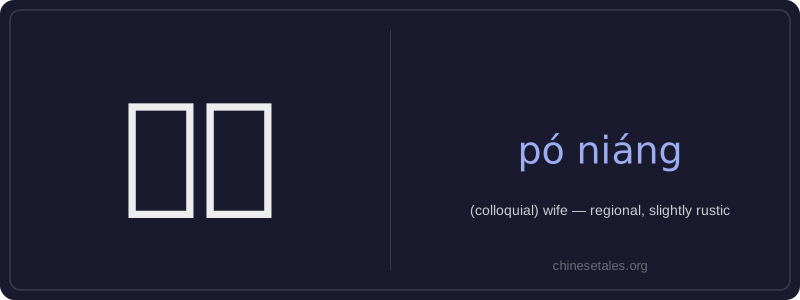
婆娘 (pó niáng) is a colloquial, regionally marked term for 'wife', commonly heard in northern and western Chinese dialects—especially in rural or informal speech. Though composed of 婆 (pó), which often means 'mother-in-law' or 'old woman', and 娘 (niáng), meaning 'mother' or 'young woman', the compound does not literally mean 'mother-in-law + mother'. Instead, it functions as a fixed, affectionate or familiar slang term for one’s spouse—similar to English expressions like 'my old lady' or 'the missus'. It carries mild rustic or earthy connotations and is rarely used in formal writing or polite conversation.
The word reflects traditional kinship language repurposed through vernacular usage: 婆 can denote a married woman in older contexts, while 娘 adds warmth or familiarity. It’s typically used by men referring to their own wives, often with teasing, fond, or matter-of-fact tone—but never toward someone else’s wife, as that would be impolite. Its register sits firmly in spoken, informal domains: family chats, local storytelling, or regional literature depicting everyday life.
Example Sentences
Related Words
国语
‘Guó yǔ’ literally means 'national language'—
无论谁
‘无论谁’ (wú lùn shéi) is a pronoun meaning
外语
‘外语’ literally means ‘outside language’ —
面条
‘面条’ (miàn tiáo) literally means ‘flour str
不对
不对 (bù duì) literally combines 不 (bù), meani
认为
‘认为’ (rèn wéi) is a transitive verb meaning
认同
‘认同’ (tóng rèn) is a verb meaning ‘to ident
中学
'Zhōngxué' literally combines 'zhōng' (middle)