Word Explanation
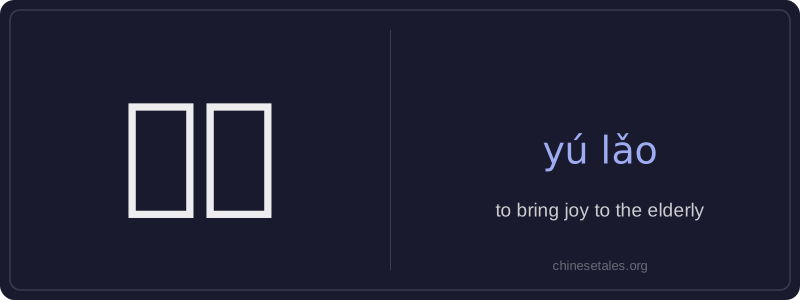
‘娱老’ is a compound verb meaning 'to bring joy or entertainment to the elderly'—often used in contexts related to elder care, intergenerational activities, or senior well-being. The character 娱 (yú) means 'to amuse' or 'to entertain', while 老 (lǎo) refers to 'the elderly' or 'old age'. Together, they form a concise, formal term emphasizing intentional, respectful engagement aimed at uplifting seniors’ emotional and mental health.
This word appears frequently in policy documents, community service announcements, and family caregiving discussions. It carries a warm, caring connotation and reflects Confucian values of filial piety and respect for elders. Unlike casual terms like '陪老人聊天' (chatting with elders), 娱老 implies structured or purposeful activities—such as organizing performances, teaching digital skills, or arranging cultural outings—to enrich seniors’ daily lives and reduce loneliness.
Example Sentences
Related Words
国语
‘Guó yǔ’ literally means 'national language'—
无论谁
‘无论谁’ (wú lùn shéi) is a pronoun meaning
外语
‘外语’ literally means ‘outside language’ —
面条
‘面条’ (miàn tiáo) literally means ‘flour str
不对
不对 (bù duì) literally combines 不 (bù), meani
认为
‘认为’ (rèn wéi) is a transitive verb meaning
认同
‘认同’ (tóng rèn) is a verb meaning ‘to ident
中学
'Zhōngxué' literally combines 'zhōng' (middle)