Word Explanation
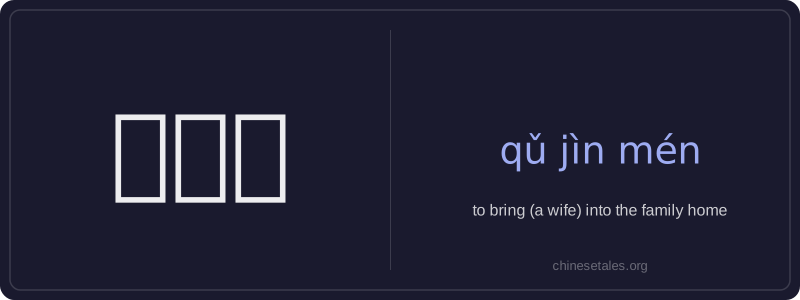
'Qǔ jìn mén' literally means 'to take (a wife) in through the door' and refers to the traditional act of bringing a bride into the groom’s family home after marriage—symbolizing her formal entry into his household and lineage. The verb 娶 (qǔ) specifically denotes 'to marry (a wife)' (used only for the groom's perspective), while 进门 (jìn mén) means 'to enter the door', here carrying cultural weight as the moment the bride crosses the threshold as a new family member.
This phrase is deeply rooted in Chinese kinship customs and reflects patrilocal residence norms. It’s commonly used in narratives about weddings, family history, or intergenerational stories—not in modern legal or bureaucratic contexts. Though less literal today due to changing living arrangements, it remains a vivid, culturally resonant expression in speech and writing when emphasizing tradition, acceptance, or familial integration.
Example Sentences
Related Words
国语
‘Guó yǔ’ literally means 'national language'—
无论谁
‘无论谁’ (wú lùn shéi) is a pronoun meaning
外语
‘外语’ literally means ‘outside language’ —
面条
‘面条’ (miàn tiáo) literally means ‘flour str
不对
不对 (bù duì) literally combines 不 (bù), meani
认为
‘认为’ (rèn wéi) is a transitive verb meaning
认同
‘认同’ (tóng rèn) is a verb meaning ‘to ident
中学
'Zhōngxué' literally combines 'zhōng' (middle)