Word Explanation
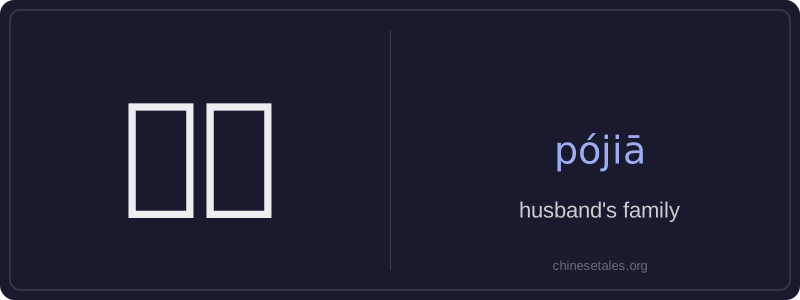
‘婆家’ (pójiā) literally combines ‘婆’ (pó), meaning ‘mother-in-law’ or more broadly ‘maternal side of the husband’s family’, and ‘家’ (jiā), meaning ‘family’ or ‘home’. Together, it specifically refers to the husband’s family—especially from the wife’s perspective—and often implies the household, relatives, and social expectations associated with that side of the marriage. It carries cultural weight in traditional Chinese family structures, where a married woman is said to ‘enter the husband’s family’ (嫁入婆家).
This term is commonly used in discussions about marriage customs, inter-family relationships, relocation after marriage, or responsibilities toward in-laws. It contrasts with ‘娘家’ (niángjiā), the wife’s natal family. While ‘婆家’ is neutral in register, its use often signals topics like filial duty, gender roles, or familial obligation—and appears frequently in both spoken and written Chinese, especially in family-related narratives or advice.
Example Sentences
Related Words
国语
‘Guó yǔ’ literally means 'national language'—
无论谁
‘无论谁’ (wú lùn shéi) is a pronoun meaning
外语
‘外语’ literally means ‘outside language’ —
面条
‘面条’ (miàn tiáo) literally means ‘flour str
不对
不对 (bù duì) literally combines 不 (bù), meani
认为
‘认为’ (rèn wéi) is a transitive verb meaning
认同
‘认同’ (tóng rèn) is a verb meaning ‘to ident
中学
'Zhōngxué' literally combines 'zhōng' (middle)