Word Explanation
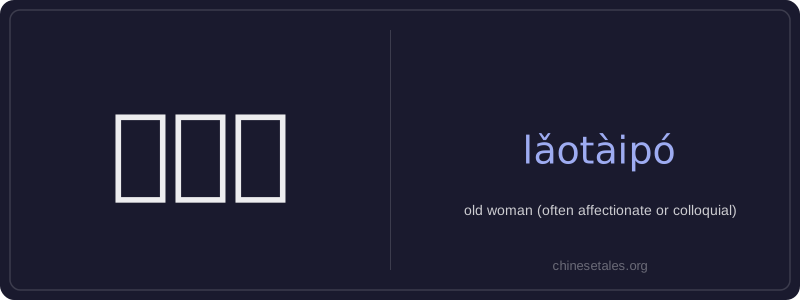
‘Lǎotàipó’ literally combines three characters: ‘lǎo’ (old), ‘tài’ (a respectful or emphatic prefix often used for elders), and ‘pó’ (an informal, colloquial term for ‘woman’ or ‘grandmother’). Together, it refers to an elderly woman—typically one who is visibly aged, perhaps in her 60s or older. Though the term contains ‘lǎo’, it’s not inherently disrespectful; in many contexts, especially among family or close acquaintances, it carries warmth, familiarity, or gentle teasing.
It’s commonly used in spoken Mandarin and appears frequently in dialogue, storytelling, and everyday descriptions—such as referring to a neighbor, a shopkeeper, or a grandmother figure. Unlike formal terms like ‘lǎorén’ (elderly person) or ‘lǎonǎinai’ (paternal grandmother), ‘lǎotàipó’ is more vivid and down-to-earth, sometimes evoking a kindly, weathered, or no-nonsense personality. Its tone depends entirely on context and intonation: said with a smile, it’s affectionate; said coldly or loudly, it may sound dismissive.
Example Sentences
Related Words
国语
‘Guó yǔ’ literally means 'national language'—
无论谁
‘无论谁’ (wú lùn shéi) is a pronoun meaning
外语
‘外语’ literally means ‘outside language’ —
面条
‘面条’ (miàn tiáo) literally means ‘flour str
不对
不对 (bù duì) literally combines 不 (bù), meani
认为
‘认为’ (rèn wéi) is a transitive verb meaning
认同
‘认同’ (tóng rèn) is a verb meaning ‘to ident
中学
'Zhōngxué' literally combines 'zhōng' (middle)