Word Explanation
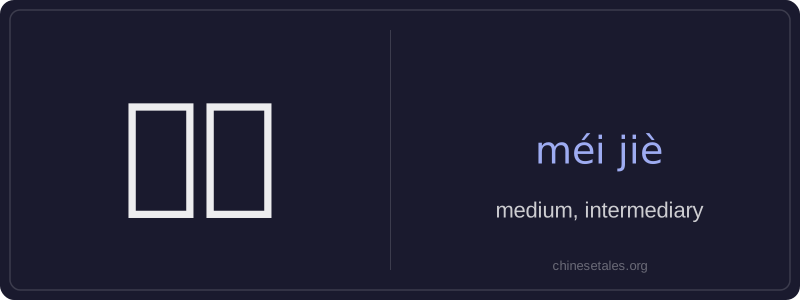
‘媒介’ (méi jiè) literally combines ‘媒’ (méi), meaning ‘go-between’ or ‘matchmaker’, and ‘介’ (jiè), meaning ‘intermediary’ or ‘to intervene’. Together, they form a formal noun meaning ‘medium’ or ‘intermediary’—a person, thing, or system that carries information, transmits influence, or connects two parties. It’s commonly used in academic, scientific, and media contexts, such as biology (e.g., disease vectors), communications (e.g., mass media), and diplomacy (e.g., cultural exchange facilitators).
Unlike colloquial terms like ‘中间人’ (zhōngjiān rén), ‘媒介’ carries a neutral-to-formal register and often implies functional, systemic, or impersonal mediation—not personal relationships. It can refer to physical carriers (e.g., water as a disease媒介), technological platforms (e.g., social media as an information媒介), or abstract conduits (e.g., language as a cultural媒介). The word is rarely used in casual speech and appears more frequently in writing, textbooks, and professional discourse.
Example Sentences
Related Words
国语
‘Guó yǔ’ literally means 'national language'—
无论谁
‘无论谁’ (wú lùn shéi) is a pronoun meaning
外语
‘外语’ literally means ‘outside language’ —
面条
‘面条’ (miàn tiáo) literally means ‘flour str
不对
不对 (bù duì) literally combines 不 (bù), meani
认为
‘认为’ (rèn wéi) is a transitive verb meaning
认同
‘认同’ (tóng rèn) is a verb meaning ‘to ident
中学
'Zhōngxué' literally combines 'zhōng' (middle)