Word Explanation
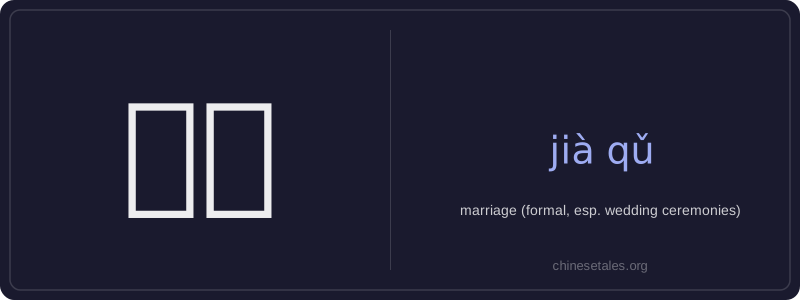
‘嫁娶’ (jià qǔ) is a formal, literary noun meaning ‘marriage’, especially emphasizing the wedding ceremonies and the traditional social process of a woman marrying out (嫁) and a man taking a wife (娶). Though composed of two verbs—‘嫁’ (to marry off, used for women) and ‘娶’ (to take as wife, used for men)—the compound functions as a single noun referring to the entire marriage institution or event. It carries strong cultural connotations of family alliance, ritual observance, and social transition, and is commonly found in classical texts, official announcements, wedding invitations, and discussions about marriage customs.
Unlike colloquial terms like 结婚 (jiéhūn), ‘嫁娶’ implies formality, tradition, and often a collective or familial perspective rather than individual romance. It may appear in phrases like 嫁娶之礼 (the rites of marriage) or 嫁娶大事 (a major life event: marriage). While still understood by all native speakers, it is rarely used in casual speech and sounds elevated or even archaic in everyday conversation.
Example Sentences
Related Words
国语
‘Guó yǔ’ literally means 'national language'—
无论谁
‘无论谁’ (wú lùn shéi) is a pronoun meaning
外语
‘外语’ literally means ‘outside language’ —
面条
‘面条’ (miàn tiáo) literally means ‘flour str
不对
不对 (bù duì) literally combines 不 (bù), meani
认为
‘认为’ (rèn wéi) is a transitive verb meaning
认同
‘认同’ (tóng rèn) is a verb meaning ‘to ident
中学
'Zhōngxué' literally combines 'zhōng' (middle)