Word Explanation
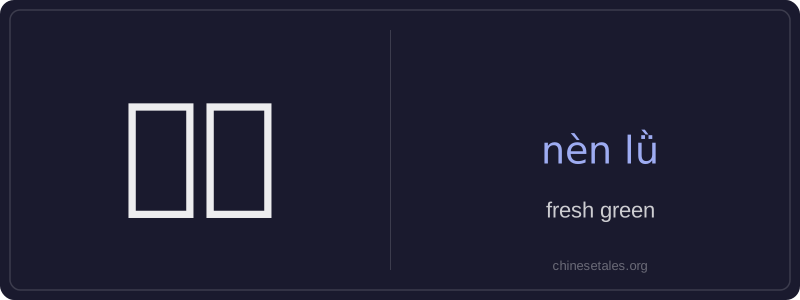
"Nèn lǜ" literally combines 嫩 (nèn), meaning "tender," "soft," or "fresh," and 绿 (lǜ), meaning "green." Together, they describe a delicate, light, vibrant green — the kind seen in newly sprouted leaves, young grass, or early spring foliage. It evokes youth, vitality, and natural renewal, carrying a gentle, poetic connotation rather than just a color specification.
This term is commonly used in descriptive writing, nature photography captions, gardening contexts, and seasonal poetry. Unlike generic terms like 绿色 (lǜsè, "green color"), 嫩绿 emphasizes freshness and tenderness — it’s not just green, but *newly* green. It rarely appears in technical or formal scientific contexts; instead, it belongs to literary, artistic, or everyday observational language, especially when highlighting growth, springtime, or delicate natural beauty.
Example Sentences
Related Words
国语
‘Guó yǔ’ literally means 'national language'—
无论谁
‘无论谁’ (wú lùn shéi) is a pronoun meaning
外语
‘外语’ literally means ‘outside language’ —
面条
‘面条’ (miàn tiáo) literally means ‘flour str
不对
不对 (bù duì) literally combines 不 (bù), meani
认为
‘认为’ (rèn wéi) is a transitive verb meaning
认同
‘认同’ (tóng rèn) is a verb meaning ‘to ident
中学
'Zhōngxué' literally combines 'zhōng' (middle)