Word Explanation
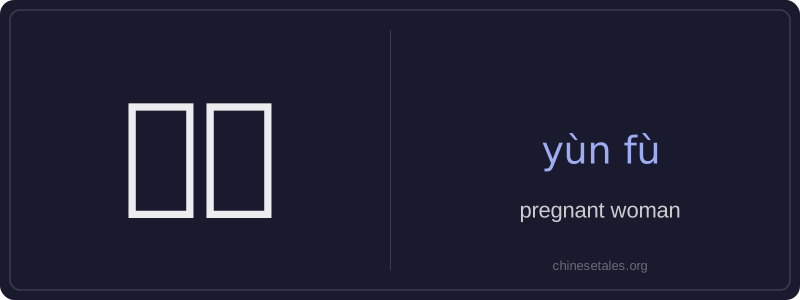
孕妇 literally combines 孕 (yùn), meaning 'to be pregnant' or 'pregnancy', and 妇 (fù), meaning 'woman' or 'married woman'. Together, they form a formal, respectful noun meaning 'pregnant woman'—a term commonly used in medical, public, and official contexts. It emphasizes the physiological state rather than personal identity, so it’s neutral and appropriate for professional communication.
This word appears frequently in healthcare settings (e.g., prenatal care notices), public signage (e.g., priority seating on buses), and news reports. Unlike colloquial terms like 怀孕的人 (huái yùn de rén) or slang such as 有喜了 (yǒu xǐ le), 孕妇 carries no emotional connotation—it’s factual, dignified, and universally understood across Mandarin-speaking regions.
Example Sentences
Related Words
国语
‘Guó yǔ’ literally means 'national language'—
无论谁
‘无论谁’ (wú lùn shéi) is a pronoun meaning
外语
‘外语’ literally means ‘outside language’ —
面条
‘面条’ (miàn tiáo) literally means ‘flour str
不对
不对 (bù duì) literally combines 不 (bù), meani
认为
‘认为’ (rèn wéi) is a transitive verb meaning
认同
‘认同’ (tóng rèn) is a verb meaning ‘to ident
中学
'Zhōngxué' literally combines 'zhōng' (middle)