Word Explanation
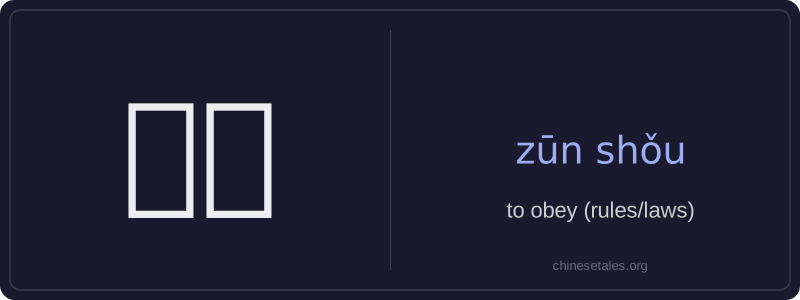
遵守 (zūn shǒu) is a compound verb meaning 'to obey' or 'to comply with' — especially formal rules, laws, regulations, instructions, or agreements. The first character 遵 (zūn) means 'to follow respectfully' or 'to adhere to', carrying a sense of deference and intentionality; the second character 守 (shǒu) means 'to guard', 'to uphold', or 'to maintain', emphasizing active commitment and responsibility. Together, they convey not just passive compliance but conscientious, sustained adherence.
This word is commonly used in formal, official, or institutional contexts — such as legal documents, school policies, workplace guidelines, public health advisories, or medical instructions. It’s rarely used for casual or personal preferences (e.g., you wouldn’t say 遵守我的建议); instead, it applies to authoritative, binding, or socially expected standards. Native speakers often pair it with nouns like 规则 (guīzé, 'rules'), 法律 (fǎlǜ, 'laws'), 纪律 (jìlǜ, 'discipline'), or 医嘱 (yīzhǔ, 'doctor’s orders').
Example Sentences
Related Words
国语
‘Guó yǔ’ literally means 'national language'—
无论谁
‘无论谁’ (wú lùn shéi) is a pronoun meaning
外语
‘外语’ literally means ‘outside language’ —
面条
‘面条’ (miàn tiáo) literally means ‘flour str
不对
不对 (bù duì) literally combines 不 (bù), meani
认为
‘认为’ (rèn wéi) is a transitive verb meaning
认同
‘认同’ (tóng rèn) is a verb meaning ‘to ident
中学
'Zhōngxué' literally combines 'zhōng' (middle)