Word Explanation
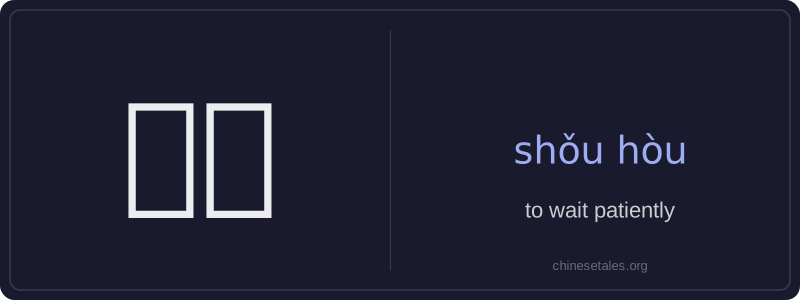
守候 (shǒu hòu) is a compound verb meaning 'to wait patiently'—often with quiet devotion, loyalty, or emotional investment. The first character 守 (shǒu) means 'to guard' or 'to keep watch', carrying connotations of steadfastness and responsibility; the second character 候 (hòu) means 'to wait' or 'to await', emphasizing anticipation and readiness. Together, they convey more than mere waiting—they suggest an active, tender, and enduring presence, as if guarding time itself for someone or something important.
This word is commonly used in emotionally resonant contexts: waiting for a loved one’s return, staying by a sick person’s bedside, or anticipating a meaningful event like a child’s first steps. It often appears in literary, poetic, or heartfelt speech—not in casual or transactional settings (e.g., waiting in line). While it can be used transitively ('守候 someone'), it frequently appears without an object when the context implies who or what is being waited for, especially in written or formal spoken Chinese.
Example Sentences
Related Words
国语
‘Guó yǔ’ literally means 'national language'—
无论谁
‘无论谁’ (wú lùn shéi) is a pronoun meaning
外语
‘外语’ literally means ‘outside language’ —
面条
‘面条’ (miàn tiáo) literally means ‘flour str
不对
不对 (bù duì) literally combines 不 (bù), meani
认为
‘认为’ (rèn wéi) is a transitive verb meaning
认同
‘认同’ (tóng rèn) is a verb meaning ‘to ident
中学
'Zhōngxué' literally combines 'zhōng' (middle)