Word Explanation
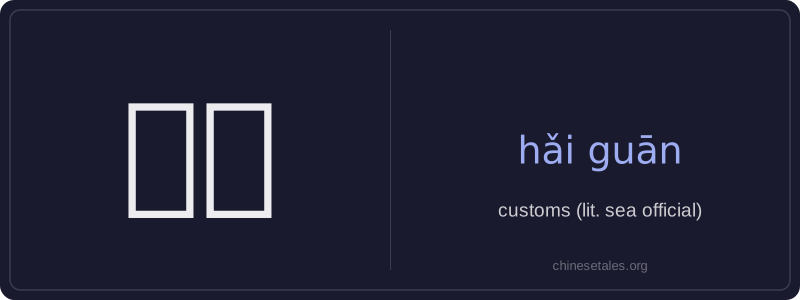
‘海关’ (hǎi guān) literally means ‘sea official’, reflecting its historical origin as a government agency overseeing maritime trade and border control. Today, it refers to the national customs authority responsible for regulating the flow of goods, people, and vehicles across China’s borders — whether by sea, air, or land. Though the character 海 (‘sea’) suggests a maritime focus, the term is used broadly for all official customs checkpoints, including airports and land border crossings.
The word combines 海 (hǎi, ‘sea’) and 关 (guān, ‘pass’, ‘checkpoint’, or ‘barrier’), evoking the idea of a controlled entry point. In daily usage, ‘海关’ appears in contexts like airport arrivals, import/export procedures, duty-free shopping, and baggage inspection. It’s a formal institutional term — you’ll see it on signs, official documents, and news reports, but rarely in casual conversation unless discussing travel or shipping logistics.
Example Sentences
Related Words
国语
‘Guó yǔ’ literally means 'national language'—
无论谁
‘无论谁’ (wú lùn shéi) is a pronoun meaning
外语
‘外语’ literally means ‘outside language’ —
面条
‘面条’ (miàn tiáo) literally means ‘flour str
不对
不对 (bù duì) literally combines 不 (bù), meani
认为
‘认为’ (rèn wéi) is a transitive verb meaning
认同
‘认同’ (tóng rèn) is a verb meaning ‘to ident
中学
'Zhōngxué' literally combines 'zhōng' (middle)