Word Explanation
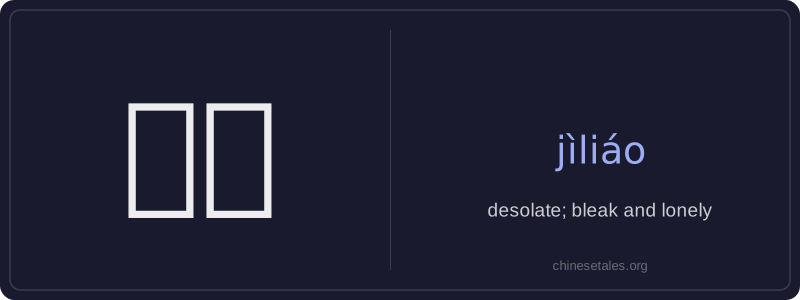
寂寥 (jìliáo) is an elegant, literary adjective describing a profound sense of desolation and loneliness—often evoking emptiness in both physical space and inner feeling. The character 寂 (jì) means 'stillness', 'silence', or 'solitude', while 寥 (liáo) conveys 'sparseness', 'emptiness', or 'vast emptiness'. Together, they intensify each other to suggest not just quiet, but a haunting, atmospheric absence: an abandoned courtyard at dusk, a snow-covered mountain pass, or the emotional hollowness after loss. It’s more poetic and somber than common words like 孤单 (gūdān) or 冷清 (lěngqīng).
This word appears frequently in classical poetry, modern essays, and descriptive prose—but rarely in casual speech. It carries a refined, slightly melancholic tone and often modifies nouns like 氛围 (fēnwéi, 'atmosphere'), 夜晚 (yèwǎn, 'night'), or 心境 (xīnjìng, 'state of mind'). Because it’s two-character and monosyllabic in rhythm, it’s often used in parallel structures or paired with other literary adjectives for stylistic effect.
Example Sentences
Related Words
国语
‘Guó yǔ’ literally means 'national language'—
无论谁
‘无论谁’ (wú lùn shéi) is a pronoun meaning
外语
‘外语’ literally means ‘outside language’ —
面条
‘面条’ (miàn tiáo) literally means ‘flour str
不对
不对 (bù duì) literally combines 不 (bù), meani
认为
‘认为’ (rèn wéi) is a transitive verb meaning
认同
‘认同’ (tóng rèn) is a verb meaning ‘to ident
中学
'Zhōngxué' literally combines 'zhōng' (middle)