Word Explanation
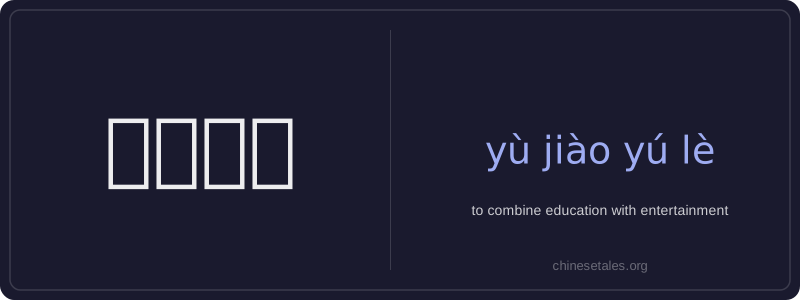
‘寓教于乐’ literally means ‘to lodge teaching within joy’ — each character contributes to this idea: 寓 (to lodge/embed), 教 (teaching/education), 于 (within/in), and 乐 (joy/pleasure). Together, the phrase expresses the pedagogical principle of making learning enjoyable and engaging rather than dry or forced. It emphasizes that knowledge is most effectively absorbed when wrapped in fun, creativity, or real-life relevance.
This concept is widely used in Chinese education policy, curriculum design, children’s media, language-learning apps, and museum exhibits. Teachers, parents, and educational content creators often aim for ‘yù jiào yú lè’ by using games, storytelling, songs, or interactive activities. Though it functions grammatically as a noun or adverbial phrase, it typically appears in formal or semi-formal contexts — such as policy documents, teaching reflections, or reviews of educational resources — rather than casual daily speech.
Example Sentences
Related Words
国语
‘Guó yǔ’ literally means 'national language'—
无论谁
‘无论谁’ (wú lùn shéi) is a pronoun meaning
外语
‘外语’ literally means ‘outside language’ —
面条
‘面条’ (miàn tiáo) literally means ‘flour str
不对
不对 (bù duì) literally combines 不 (bù), meani
认为
‘认为’ (rèn wéi) is a transitive verb meaning
认同
‘认同’ (tóng rèn) is a verb meaning ‘to ident
中学
'Zhōngxué' literally combines 'zhōng' (middle)